
-
 New productBrake pivot
- €2.99
 New product
 New product
 New product
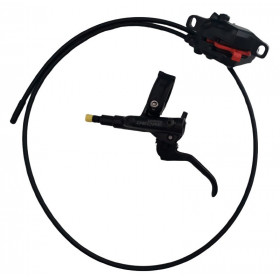 New product -50%Hydraulic front disc brake Shimano Deore M6100
- €51.50
- €102.99
 New product
 New product -25%Cantilever brake
- €6.74
- €8.99
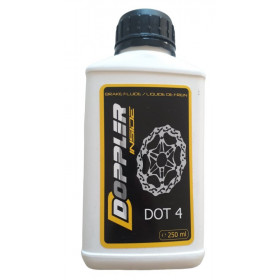 New productBrake fluid dot4 250 ml
- €4.50
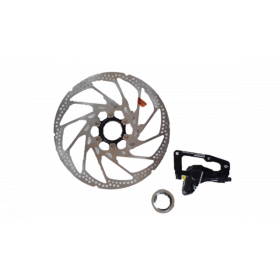 New product
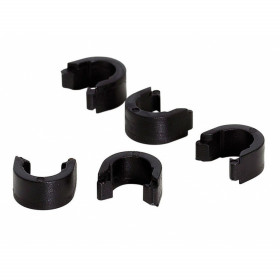 New product5 hoses clips XLC
- €1.50
 New product
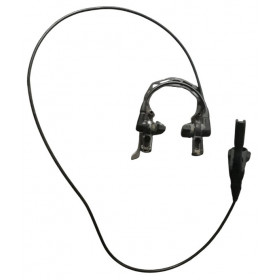 UsedMagura HS 22 brake
- €24.99
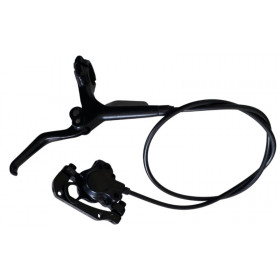 Used
Used New productV brake
- €8.49
 New product
 New product
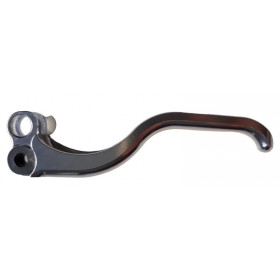 New product -18%Hope mono brake lever
- €19.68
- €24.00
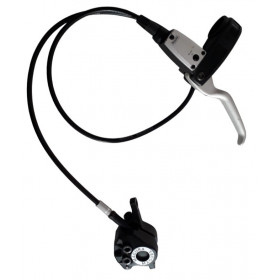 New product -40%MTB front disc brake Magura Julie HP
- €53.94
- €89.90
 New product -30%Magura HS 11 hydraulic pads brake
- €48.99
- €69.99
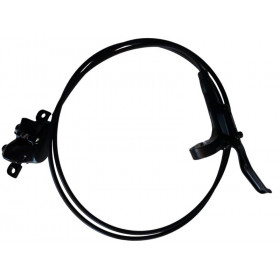 New product -38%Rear disc brake Shimano Altus BL-MT201
- €24.79
- €39.99
 New product
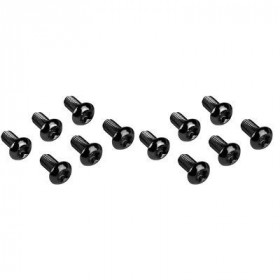
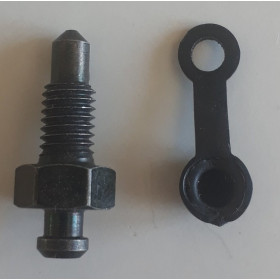 New productDisc brake bleed screw
- €3.99
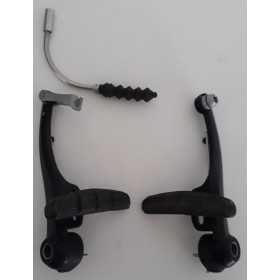 UsedV-Brake used
- €3.99
 New product
 Used
Used New product
 Used
Used More detailsNew product -50% Out-of-StockMagura mountain bike hose kit
- €25.00
- €49.99
 More detailsNew product Out-of-StockMagura HS 33 brake
- €39.99
 More detailsNew product Out-of-StockPromax V brake
- €8.49
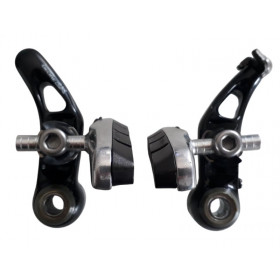 More detailsNew product -40% Out-of-StockCantilever brake Shimano Deore LX BR-M565
- €17.39
- €28.99
 More detailsNew product Out-of-Stock
Showing 1-32 of 32 item(s)
VTT brakes are essential for ensuring safety, control, and performance on all types of terrain. They work in conjunction with the entire bike: the frame, fork, headset, drivetrain, wheels, as well as the derailleur hanger, which ensures precise alignment of the rear derailleur. Choosing the right brakes also fits into a broader consideration of the bike’s components, accessories, and even the rider’s clothing, all of which contribute to control and comfort during riding. Brake selection can vary in terms of type, technical features, and brands. Here is a complete guide to understanding the available options.
1. Types of MTB brakes:
a. Hydraulic disc brakes
Description: System using brake fluid to actuate the pads against the disc.Benefits :
High stopping power, even in rain or mud.
Good modulation, allowing precise dosage of braking force.
Resistant to overheating thanks to ventilated discs and adapted pads.Disadvantages:
More complex maintenance (need to drain the liquid).
Higher cost than mechanical systems.b. Mechanical disc brakes
Description: System using a cable to transmit braking force.Benefits :
Less expensive and easier to maintain.
Sufficient for light practices (XC or leisure).Disadvantages:
Less power and modulation than hydraulic brakes.
c. MTB rim brakes (V-brake or cantilever)
Description: used mainly on entry-level or vintage mountain bikes.Benefits :
Lightweight and economical.
Easy to maintain.Disadvantages:
Less effective in wet or muddy conditions.
Less power and modulation compared to disc brakes.2. Technical characteristics of MTB brakes:
a. Number of pistons
Hydraulic brakes can have:
2 pistons: Moderate power, suitable for cross-country or trail running.
4 pistons: Increased power for enduro and downhill.b. Disc diameter
160 mm MTB disc rotor: For light practices such as XC or trail running.
180-200 mm: For enduro and downhill, where great power is needed.
Ventilated or floating discs: Reduce overheating on long descents.c. Brake pads
Organic MTB disc brake pads (resin):
Quieter and better modulation.
Less resistant to wear and heat.
Metallic (sinterized):
Durable and efficient in high heat.
Noisier and less progressive.d. Ergonomic and adjustable handles
Allows you to adjust the clearance and sensitivity of the brake for optimal comfort.e. Mounting Compatibility
Post Mount or Flat Mount: Standards for fixing to the frame or fork by an MTB disc brake adapter .
f. Heat resistance
High-end brakes equipped with cooling systems (e.g. fins on the pads or ventilated discs).
3. Popular MTB brake brands:
a. Shimano
Deore M6100: Reliable hydraulic entry-level model.
XT M8120: Power and modulation adapted to trail and enduro.
XTR M9120: Top of the range for competition, with optimal lightness.b. SRAM
Level TLM: Lightweight and efficient, ideal for XC and trail riding.
RE Guide: Specially designed for enduro and electric bikes.
RSC code: Reference for enduro and downhill thanks to its exceptional power.c. Magura
MT5: Affordable and efficient model for enduro.
MT7 Pro: Very powerful 4-piston brakes for technical descents.d. Hope
Tech 3 E4: Powerful and customizable, ideal for enduro.
Tech 4 V4: Designed for descent, with excellent thermal resistance.e. Tektro/TRP
TRP Slate T4: Perfect for versatile practices like trail and enduro.
Tektro Orion: Affordable brakes for leisure mountain bike enthusiasts.f. Formula
Cura 4: Perfect combination of power and modulation for enduro.
4. Tips for choosing your MTB brakes:
Identify your practice:
XC or light trail: 2-piston brakes and 160-180 mm discs.
Enduro and downhill: 4-piston brakes and 180-203 mm discs.Consider your budget:
Shimano Deore or SRAM Level for excellent value for money.
Magura MT7 or Hope Tech for high-end performance.Choose suitable disks:
Floating or ventilated discs are recommended for long descents.Maintain your brakes:
Replace the pads regularly.
Bleed the hydraulic system at least once a year to maintain performance.In summary
MTB brakes play a crucial role in safety and performance on all types of terrain. Hydraulic brakes dominate for their power and reliability, with brands like Shimano, SRAM, and Magura offering options to suit every need. Whether you are a fan of walks in the forest or a fan of dizzying descents, choosing a good braking system will significantly improve your cycling experience.
There are 32 products.