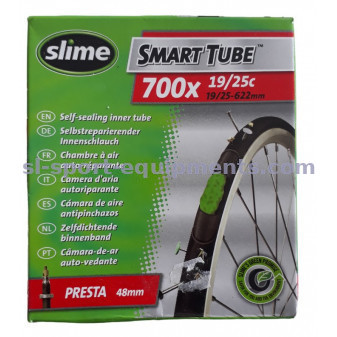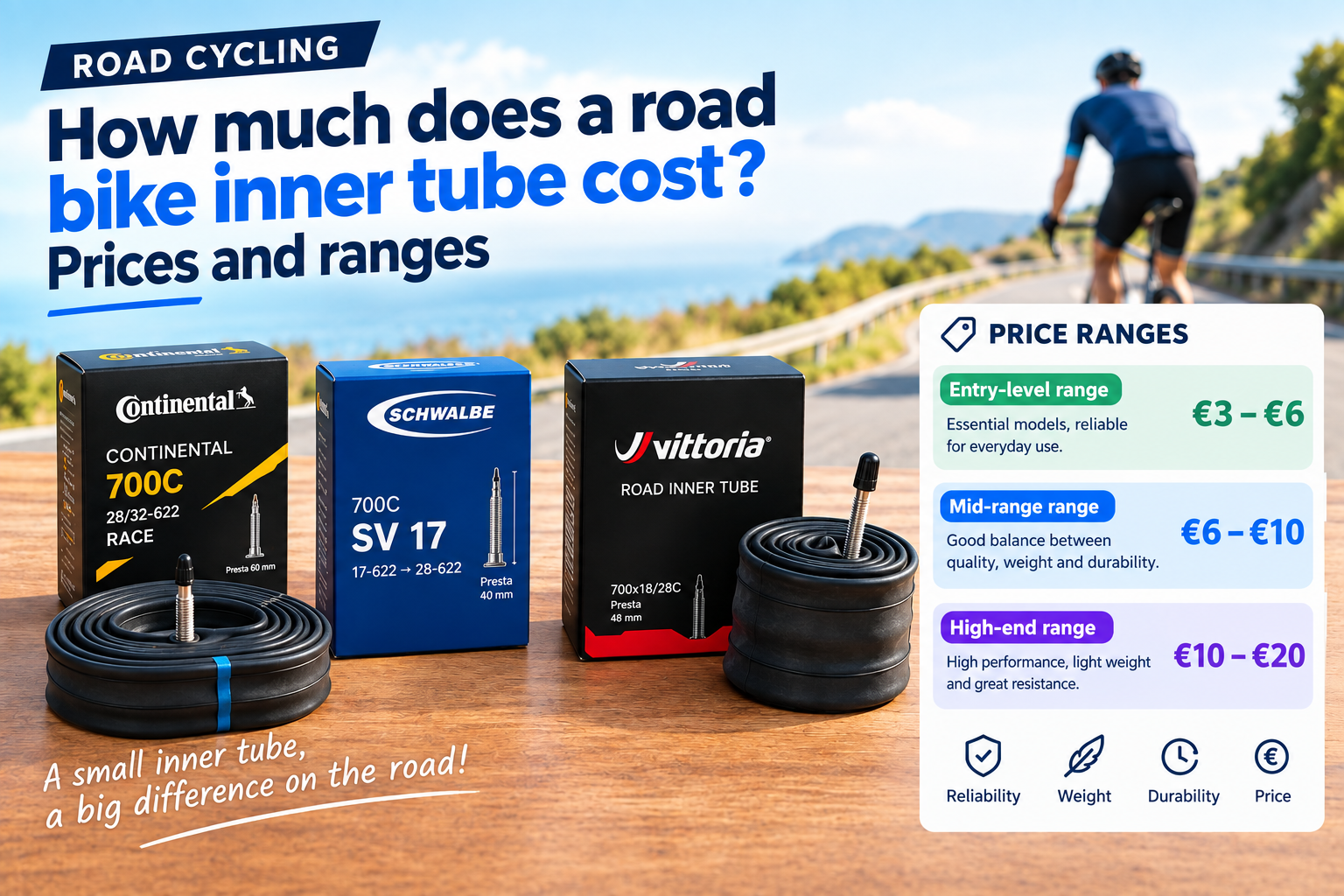
The price of a road bike inner tube can vary tenfold: from around £2 for a basic butyl tube to over £20 for a high-end TPU one. Understanding what drives these differences helps you choose the tube that suits your budget and riding, without paying for features you don't actually need.
Browse our range of road bike inner tubes in stock.
1. What drives the price of an inner tube
Several factors explain the price gap between two seemingly similar inner tubes:
- The material: butyl, latex and TPU don't cost the same to manufacture. For a full breakdown of their differences, see our guide to butyl, latex or TPU.
- Weight: lightweight tubes require more careful manufacturing, which is reflected in the price.
- Brand and positioning: budget brands and premium racing brands don't carry the same price tag, even for sometimes similar characteristics.
- Valve length and type: long or specific valves (tubeless, built-in extender) add a small premium compared to standard valves.
2. Price ranges by material
The table below gives an indicative price range by tier and material:
| Tier | Material | Price range |
|---|---|---|
| Entry-level | Standard butyl | £2 to £5 |
| Mid-range | Reinforced butyl / budget latex | £5 to £10 |
| High-end | Race latex / TPU | £10 to £22 |
3. Should you always go for the cheapest option?
For casual riding, an entry-level butyl inner tube remains a perfectly sound choice: it doesn't cost you any meaningful performance day to day and does its job reliably.
The extra cost of higher-end tiers is mainly justified for competitive riding, where the weight or rolling efficiency gain can have a genuine impact on performance.
Good to know: for a spare inner tube in your saddle bag, there's no need to splash out on a premium option. A basic butyl tube will do the job perfectly well as a backup, the important thing being that it's the right size for your tyre.
4. The real cost to consider: cost per use
The purchase price is only part of the equation. A cheap inner tube that punctures frequently can end up costing more over time than a slightly pricier but more durable one.
The smart approach is to factor in how often you actually get punctures in your riding, rather than basing your decision purely on the initial purchase price.