Getting a puncture while out riding is part of everyday life for a road cyclist. Knowing how to change your inner tube quickly and correctly means you avoid being stuck at the roadside — and, above all, avoid damaging your new tube during fitting. Here's the step-by-step method for getting it right, along with the most common mistakes to avoid.
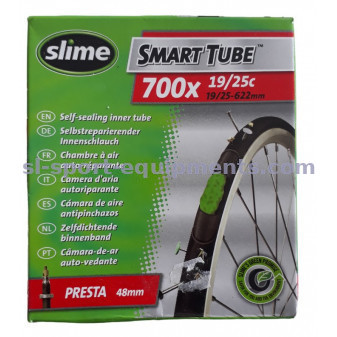
Browse our range of road bike inner tubes and road bike puncture repair patches in stock.
1. The tools you'll need
Before you start, gather the following:
- A spare inner tube matched to your tyre size
- Two or three tyre levers
- A hand pump, mini pump, or CO2 cartridge with adapter
- Optionally, a puncture repair kit as a backup
Good to know: always carry a spare inner tube rather than relying solely on patch repairs while out riding. It's faster and more reliable in the event of a significant puncture, and lets you get going again without waiting for repair glue to dry.
2. Removing the wheel and taking off the tyre
Open the quick release or thru-axle on your wheel and remove it from the frame or fork. Then fully deflate the existing inner tube by pressing on the valve.
Insert a tyre lever under the tyre's bead, use it to lever the bead over the rim edge, then hook it onto a spoke to hold it in place. Slide a second tyre lever a little further along the circumference and run it all the way round the wheel to fully release one side of the tyre.
Wherever possible, favour removing the tyre by hand: it's gentler on the rim, particularly on carbon rims. Reserve the use of a metal tyre lever for cases where the tyre is genuinely difficult to remove.
3. Removing the old inner tube and checking the tyre
Pull out the punctured inner tube, starting from the valve. Then run your hand around the inside of the tyre, all the way round, to check for any foreign object: a thorn, a piece of glass or a wire fragment can remain lodged in the casing and immediately puncture the new tube if you don't remove it.
While you're at it, check the condition of the rim tape: if it's shifted, damaged or badly positioned, it too can damage the new inner tube. Rim tape in poor condition should be replaced before continuing.
Watch out: never refit a new inner tube without having first checked the inside of the tyre. This is the most common cause of an immediate puncture after changing a tube.
4. Fitting the new inner tube
Inflate the new inner tube very slightly, just enough to give it shape, before inserting it into the tyre. This simple step makes fitting much easier and greatly reduces the risk of pinching.
Position the valve in the hole provided on the rim first, then progressively insert the rest of the inner tube inside the tyre, all the way round.
5. Refitting the tyre and inflating
Push the second bead of the tyre back into place, by hand if possible, working progressively all the way round the rim rather than pulling on a single point. Before inflating, check that no part of the inner tube is sticking out or trapped between the tyre and the rim.
Then inflate gradually, checking that the tyre stays centred on the rim, until you reach the recommended pressure for your riding.
Tip: inflate to half pressure, check that the tyre is well centred all the way round the rim, then finish inflating to your target pressure. A poorly centred tyre can create a weak spot that leads to another puncture.
6. Mistakes to absolutely avoid
- Using a metal tyre lever aggressively on a carbon rim
- Forgetting to check the inside of the tyre before refitting
- Pinching the inner tube between the tyre and the rim during refitting
- Inflating too quickly without checking the tyre is centred on the rim
- Not matching the valve length to your rim's height