A valve that's too short for your rim, and inflating becomes difficult or hit-and-miss. Often overlooked in favour of inner tube size, valve length is nevertheless an essential factor, particularly on deep-section wheels. Here's how to choose the right one for your rim.
Browse our range of road bike inner tubes in stock.
1. What valve length is for
An inner tube's valve needs to pass all the way through the rim's depth so that enough of it protrudes on the outside to properly attach a pump head.
A valve that's too short for your rim makes inflating difficult, sometimes impossible with certain pumps whose head can't close properly on an insufficiently exposed thread. Forcing it can even end up damaging the valve's thread.
2. How to measure your rim's depth
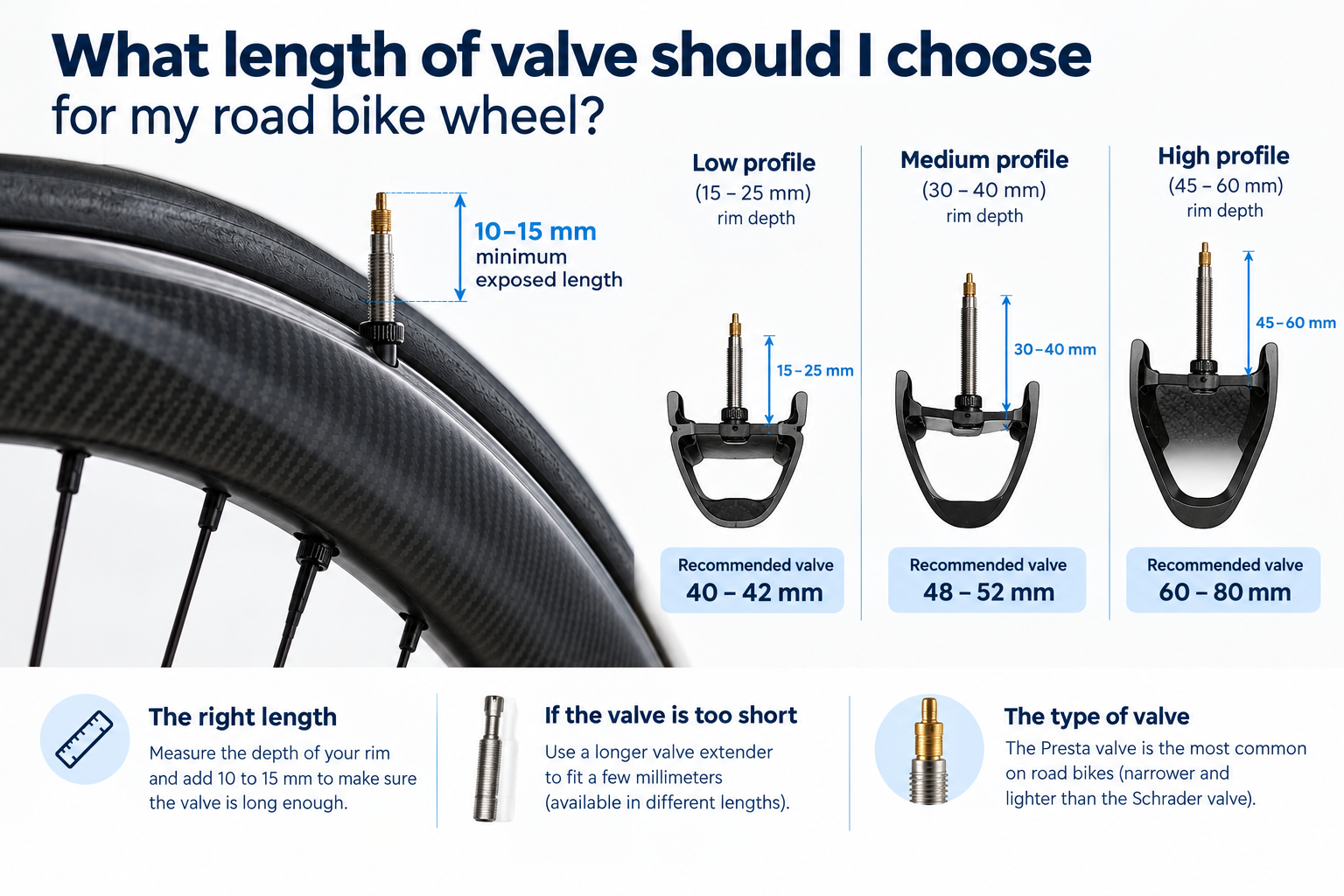
To choose the right valve length, measure your rim's profile depth, from the valve hole to the outer edge of the rim profile. This information is also usually available in the technical specifications provided by your wheel manufacturer.
Once you have this measurement, add a safety margin of 10 to 15mm to determine the minimum valve length you need. This margin ensures comfortable access to the thread for inflating.
3. Common valve lengths and their use
The table below gives an indicative guide to valve lengths suited to your rim profile:
| Rim profile | Approximate depth | Recommended valve length |
|---|---|---|
| Low profile (classic alloy) | 15 to 25mm | 40 to 42mm |
| Mid profile | 30 to 40mm | 48 to 52mm |
| Deep profile (aero carbon) | 45 to 60mm | 60 to 80mm |
These figures are indicative: if in doubt, it's better to choose a slightly longer valve than one that's too short, even if it protrudes a bit more than strictly needed from the rim.
4. What to do if the valve is too short: the valve extender
If you switch to deeper-section wheels, you don't always need to buy a whole new inner tube: a valve extender, which screws directly onto the existing valve to lengthen it, solves the problem quickly and cheaply.
One thing to keep in mind: an extender must be tightened firmly before every inflation, otherwise it can create an air leak at the joint between the original valve and the extender.
Watch out: a loosely tightened valve extender is a common cause of gradual pressure loss, sometimes wrongly mistaken for a slow puncture. If your tyre regularly loses pressure for no apparent reason, first check that the extender is properly tightened.
5. Presta or Schrader: does it affect length?
As a reminder, the Presta valve, thin and threaded, is near-universal on road bikes. The Schrader valve, wider and similar to that used on cars, is much rarer on this type of bike.
The question of length applies almost exclusively to Presta valves on a road bike, as this is the format that comes in several lengths to suit different rim profiles. Schrader valves, by contrast, come in far more standardised lengths.