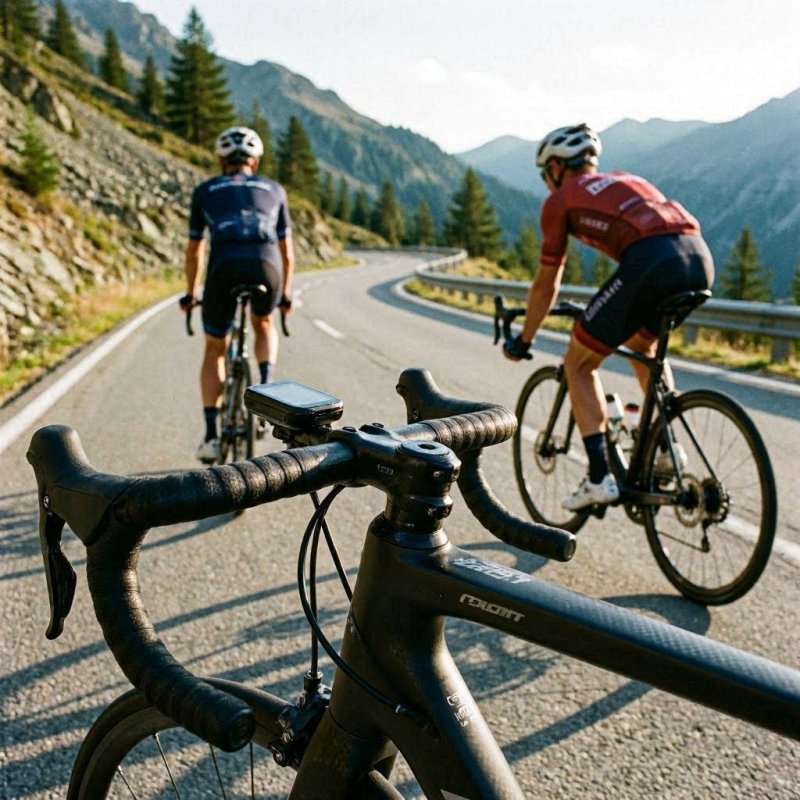
A road bike stem is not a one-size-fits-all component. Where a racer wants to stretch and lower their position for maximum aerodynamics, a sportive rider needs to balance efficiency with comfort over several hours, while an endurance cyclist prioritises an upright position that protects the back on long days in the saddle.
Riding style is the most decisive factor when choosing a stem — more so than length or material in isolation. This guide helps you identify the right stem profile for your dominant discipline: racing, sportive, endurance, gran fondo, triathlon or fitness — with specific length, angle and material recommendations for each profile.
1. How riding style shapes your position and stem choice
The stem acts on two fundamental parameters of your riding position: reach (the horizontal distance between the saddle and the handlebar) and stack (the height of the bar relative to the bottom bracket). A longer stem increases reach; a stem with a negative angle lowers the stack. These two variables define your posture — and with it, your performance and comfort.
Here is how the main road cycling disciplines sit on that spectrum:
Riding style sets the primary direction, but body proportions then fine-tune the result: a sportive rider with a short torso will not use the same stem length as one with a long torso, even if both have the same riding profile. This is covered in section 8.
Key point: your riding style determines the angle and the length range. Your body proportions refine the exact length within that range. If you ride more than one discipline, identify your dominant style — the one that accounts for over 60% of your rides — and optimise your stem for that.
2. Stem for road bike racing
Racing / Road Race
In racing, every watt and every gram matters. The stem is chosen to maximise aerodynamics and power transfer, at the cost of a demanding position that requires good lumbar flexibility and serious physical conditioning.
A long stem (110–130 mm) extends the reach and stretches the rider forward, reducing the frontal surface area exposed to the wind. Combined with a negative angle (−6° to −17°), it simultaneously lowers the handlebar, reinforcing the aerodynamic effect and improving power transfer during sprints and accelerations.
The recommended material is carbon: high-end carbon race stems weigh under 120 grams while offering greater stiffness than aluminium — essential to avoid losing energy through cockpit flex during maximal efforts. See our guide on carbon road bike stems for recommended models.
Watch out for: this setup is not suitable if you lack lumbar flexibility or suffer from lower back pain. Always validate the position with a professional fitter before committing to a stem length.
3. Stem for sportive riding and gran fondos
Sportive / Gran Fondo
The sportive rider is chasing a demanding balance: being efficient over several hours without landing in an extreme position that causes back pain by kilometre 150. This is the most common profile among serious amateur cyclists.
A stem of 100–120 mm with a neutral to slightly negative angle (0° to −6°) delivers an extended, efficient position without requiring the flexibility of a professional racer. The handlebar typically sits at or slightly below saddle height, depending on body proportions.
For material, high-end aluminium (7075 alloy, brands such as Deda, Ritchey, FSA) offers an excellent stiffness-to-price ratio for this profile. Carbon is worthwhile if you want to reduce bike weight or compete in timed events. On rides exceeding 150 km, carbon's vibration-damping properties are a real benefit on rough roads.
Practical tip: if you are unsure between 100 mm and 110 mm, start with the shorter option. It is far easier to progressively lengthen your position than to endure an overstretched setup across a 200 km sportive.
4. Stem for endurance and long-distance cycling
Endurance / Long Distance
Endurance riding puts comfort at the very top of the priority list. The goal is not maximum speed over one hour, but the ability to sustain a steady pace for 4, 6 or 10 hours without back, neck or wrist pain.
A shorter stem (80–100 mm) shortens the reach and allows a more upright torso. Combined with a positive or neutral angle (+6° to 0°), it raises the handlebar, relieves pressure on the hands and lower back, and reduces the effort required from the back and neck muscles.
For material, prioritise a stem with good vibration-damping properties: quality aluminium or a comfort-oriented carbon (less rigid construction than race models). On long rides over rough or gravel roads, the difference is noticeable over time. A stem riser can complement the adjustment if bar height is still not sufficient.
For bikepacking riders: a short stem with a positive angle is also compatible with handlebar bags, provided the faceplate allows easy access to the bolts with the bag fitted.
5. Stem for triathlon and time trial
Triathlon / Time Trial
In triathlon and time trial, the standard road stem is often replaced by a full aerodynamic cockpit: a short base (60–90 mm) with a very negative angle, onto which tri-bars (aero extensions) are fitted to allow the rider to adopt a streamlined position with arms tucked forward.
The goal is to lower the torso as much as possible to reduce aerodynamic drag, which accounts for up to 80% of resistance to forward motion at competition speeds. The stem here serves more as a mounting platform than a comfort component.
Integrated cockpit systems (stem and extensions as a single unit) are often preferred for their greater stiffness and optimised aerodynamic profile. If you are using a standard road bike for triathlon, check that your stem is compatible with aftermarket extension systems (the 31.8 mm clamp standard is near-universal).
Important note: the aero triathlon position demands specific conditioning of the hip flexors and significant lumbar flexibility. It is incompatible with group riding in a peloton — if you alternate triathlon and group sportive riding, plan two separate cockpit configurations.
6. Stem for fitness riding and beginners
Fitness / Leisure / Beginner
For fitness riding, leisure and beginners, the absolute priority is comfort and the absence of pain. An uncomfortable position by the third ride is the number one reason cyclists stop riding road bikes.
A short to mid-length stem (70–100 mm) with a positive angle (+6° to +17°) allows an upright riding position, a natural forward sightline without excessive neck flexion, and an even weight distribution between the front and rear of the bike. This is the most welcoming setup for a cyclist returning to the saddle after a long break.
For this profile, an adjustable stem is particularly valuable: it lets you explore different positions and gradually lower the bar as flexibility and experience develop, without buying multiple stems. Aluminium is the ideal material for this profile — durable, accessible and available in all configurations.
Recommended progression: after 3–6 months of regular riding, reassess your position. It is common to want to progressively lower and lengthen the setup as flexibility improves and objectives become clearer.
7. Summary table by riding style
This table summarises the recommendations for the five riding profiles covered in this guide.
| Riding style | Length | Angle | Material | Priority |
|---|---|---|---|---|
| 🏆 Racing | 110–130 mm | −6° to −17° | Carbon | Aerodynamics, weight, stiffness |
| 🚴 Sportive / Gran Fondo | 100–120 mm | −6° to 0° | High-end alu or carbon | Performance / comfort balance over time |
| 🛣️ Endurance / Long distance | 80–100 mm | 0° to +6° | Alu or comfort carbon | Back and neck comfort |
| ⏱️ Triathlon / Time trial | 60–90 mm | −6° to −17° | Carbon or aero alu | Aero position, integrated cockpit |
| 🌿 Fitness / Beginner | 70–100 mm | +6° to +17° | Aluminium | Comfort, accessibility, room to evolve |
8. Body proportions vs riding style: how to balance both
Riding style sets the direction, but body proportions impose the limits. Two cyclists with exactly the same riding profile (sportive, for example) may need very different stem lengths if one has a long torso and the other a short one.
When body proportions override riding style
If any of the following applies to you, let your body proportions take precedence over the style-based recommendation and adjust the suggested length accordingly:
- Short torso or short arms: reduce the recommended length by 10–20 mm. A racer with a short torso will sometimes ride a 90 mm stem where a standard-proportioned racer uses 120 mm.
- Limited lumbar flexibility: move one step up the angle recommendation (e.g. from −6° to 0° for a sportive rider with limited flexibility). Forcing a low position without sufficient flexibility causes back pain and cervical strain.
- Shoulder or wrist issues: shorten the stem and raise the angle, regardless of riding style. Safety and freedom from pain are non-negotiable.
- Unusually tall or short stature: the standard length ranges apply to average builds. A rider under 5 ft 5 in or over 6 ft 3 in may need lengths outside the typical brackets.
The three-ride rule
After any stem change, allow at least three rides of normal duration before drawing conclusions. The body needs time to adapt to a new position. Mild discomfort in the first few days is normal; persistent pain after three rides signals a poor fit.
Tip: if you are exploring your position (new bike, change of discipline, return from injury), start with an adjustable stem to test multiple setups without buying several stems. Once your ideal angle and length are confirmed over several weeks of riding, invest in a fixed stem to the same specification — you will gain stiffness and save a little weight.
When to get a professional bike fit: if you are changing discipline (moving from leisure to sportive, or starting triathlon), if you have persistent pain despite multiple adjustments, or if you are investing in a bike over £2,000 / €2,000, a professional bike fit is strongly recommended. A fitter will analyse your proportions, flexibility and power output to define the optimal stem length, angle and height in a single session.
For more detail on adjustment parameters, see our guide on road bike stem adjustment and our article on what stem length to choose.
9. FAQ — Road bike stem by riding style
Conclusion
Choosing a road bike stem matched to your riding style is one of the highest-impact adjustments a cyclist can make. The right stem improves performance, comfort and long-term enjoyment of the sport — the wrong one causes pain, inefficiency and disengagement.
The essentials to remember: for racing, go long and low (long stem, negative angle, carbon). For endurance and leisure, go short and high (short stem, positive angle, comfort aluminium). For sportive and gran fondo, find your balance in between. And whatever the discipline, always let your body proportions have the final say on the exact length.
Browse our full range of road bike stems — filterable by length, material and brand — in our dedicated category.
Road bike stem guides — further reading
- Road bike stems — category page
- What stem length should I choose ?
- Road bike stem adjustment guide
- Carbon road bike stem guide
- Road bike stem riser guide
- How to change a road bike stem
- Adjustable road bike stem guide
- Road bike stem compatibility guide
- Aluminium road bike stem
- Best road bike stem brands