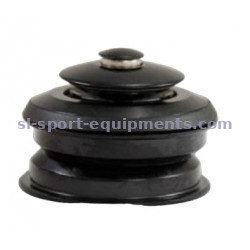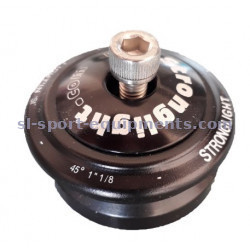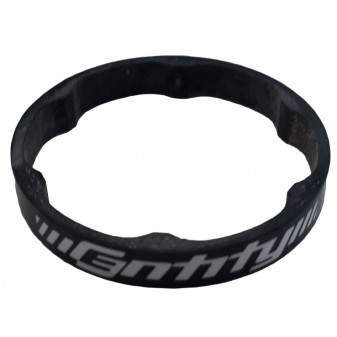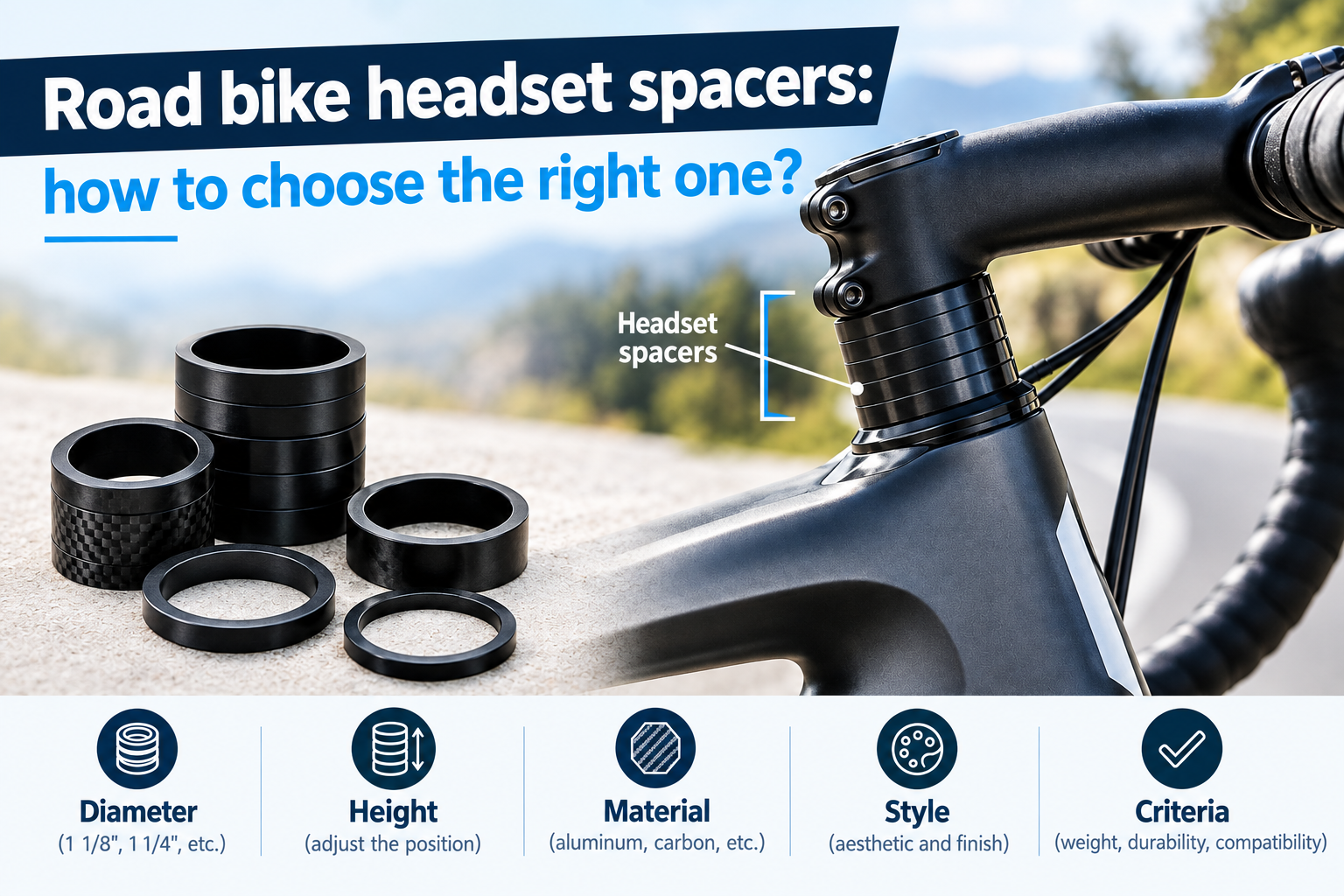
A small, often overlooked part, the headset spacer nevertheless has a direct effect on comfort and riding position. Here's how to choose the right diameter, thickness and material.
Browse our range of road bike headsets in stock.
1. What does a headset spacer do?
The spacer slides onto the fork steerer, above the headset and below (or between) the stem. Its role is simple: it takes up space on the steerer to raise or lower the handlebar height, without changing the fork or the stem. Adding spacers under the stem gives a more upright, comfortable position. Removing them, or moving them above the stem, lowers the bar for a more aerodynamic position.
2. Which spacer diameter should you choose?
The spacer's diameter must exactly match your fork steerer and headset:
- 1 inch: found on older bikes or threaded headsets;
- 1 1/8 inch: the most common standard today.
If you're unsure of your steerer's diameter, the process is the same as detailed in our article on the road bike headset bearing.
3. Which spacer thickness should you choose?
Spacers come in several common thicknesses: 2, 5, 10 and 20 mm, which can be combined to build a precise height. For fine-tuning your position by just a few millimetres, choose a thin spacer; for a more noticeable rise, a 10 or 20 mm spacer avoids stacking too many pieces.
Note: there's a limit to how many spacers you can stack above the headset. Beyond a certain height, the leverage on the fork steerer increases and can eventually weaken it. Stick to the maximum spacer height recommended by your fork manufacturer rather than a general rule of thumb.
4. Carbon or aluminium: which material should you choose?
Aluminium spacer
This is the most common and most affordable option. Sturdy and easy to fit, it suits the vast majority of uses, on aluminium as well as carbon frames.
Carbon spacer
Lighter, often chosen to match the look of a carbon frame or stem. It requires a bit more care when fitting: over-tightening can crack a poorly sized carbon spacer.
Good to know: if you're unsure about tightening torque, use an aluminium spacer directly under the stem to spread the pressure more evenly.
5. Spacers for gravel and cyclocross bikes: is there a difference?
In the vast majority of cases, spacers used on gravel or cyclocross bikes share the same standard diameters as road bikes (1" or 1"1/8). The main difference lies in usage: gravel frames, designed for a more upright position, sometimes need more spacers to reach a comfortable bar height. Browse our full range in the gravel bike category.
6. How to fit a headset spacer
- Loosen the stem clamp bolts, then remove the stem from the fork steerer.
- Add or remove the desired spacer(s), in the order you want.
- Reassemble the stem, making sure you don't exceed the maximum spacer height specified by your fork manufacturer.
- Retighten the star-nut/expander to set the preload, then retighten the stem bolts to the specified torque.