Canyon, Trek, Specialized, Cannondale... headsets aren't always interchangeable between brands. Here's how to identify the exact standard used by your frame before ordering a replacement part.
Browse our range of road bike headsets in stock.
1. Why isn't a headset always "universal"?
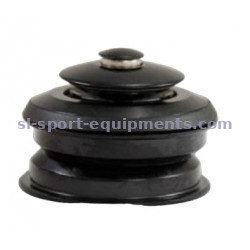
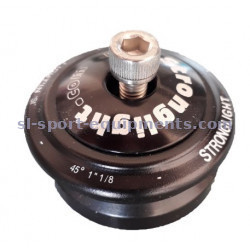
On a classic external or semi-integrated headset, the cups are separate parts, in standardised diameters (1", 1"1/8...) shared by most manufacturers. On an integrated headset, however, the bearings sit directly in a shape moulded into the frame's head tube, which can vary from one manufacturer to another. To better understand the technical vocabulary (diameter, contact angle, cartridge...), see our article on the road bike headset bearing.
2. How to find the headset compatible with your frame
- Note the reference printed on the old bearing or headset, if still legible;
- Measure the inner diameter, outer diameter and thickness of the bearings in place with callipers;
- Check the frame manufacturer's technical spec sheet (S.H.I.S. nomenclature: e.g. IS42/28.6 at the top, IS52/40 at the bottom);
- If in doubt, contact us with a photo of your current headset and your frame reference.
3. Compatibility by brand
Note: the standards below correspond to the configurations most commonly found on each range, for guidance only. They can vary by exact model and production year: always check your frame's reference before ordering.
Canyon
On the Ultimate and Aeroad ranges, Canyon most often uses integrated headsets developed with the German brand Acros, with a 1"1/4 top diameter and a 1"1/2 bottom diameter on the higher-end models (CF SLX, CF SL). Some Acros systems (such as the i-Lock) are known to be sensitive to adjustment. On a Canyon Ultimate CF SL, check the exact upper and lower bearing reference before ordering, as these can differ by model year.
Trek
Madone, Domane and Emonda models generally use a tapered integrated headset, 1"1/8 at the top and 1.5" at the bottom, often supplied by FSA. On recent Madone and Emonda generations, Trek introduced a proprietary integrated cockpit system (RCS) with specific parts that aren't interchangeable with earlier versions.
Specialized
Almost the entire Specialized road range (Tarmac, Roubaix, Allez, Venge) relies on a tapered 1"1/8 to 1.5" integrated headset, though bearing dimensions vary by model and generation. Check the exact spec (often IS42/28.6 at the top and IS52/40 at the bottom, or equivalent) rather than relying only on the general diameter.
Cannondale
On the SuperSix Evo and SystemSix, Cannondale uses tapered integrated headsets with a 1"1/8 top diameter and a bottom diameter varying between 1"1/4 and 1.5" depending on the generation. These headsets are sold as complete kits under proprietary Cannondale references.
4. What if you can't find the exact reference?
If no reference is legible and the manufacturer's documentation isn't enough to clear up the doubt, the safest approach is to remove the worn bearing and measure it precisely (inner diameter, outer diameter, thickness, contact angle). Feel free to send us these measurements, or photos along with your frame reference: our team can point you to the compatible part in our catalogue.