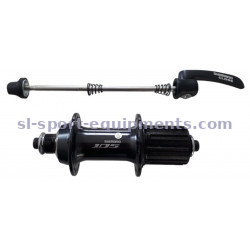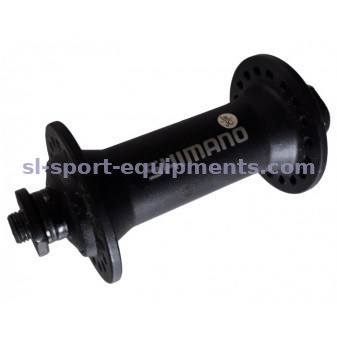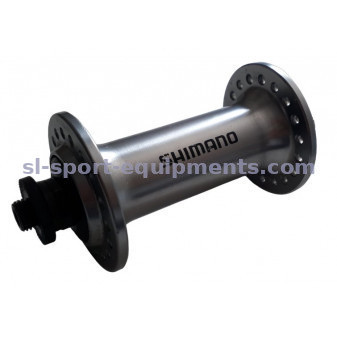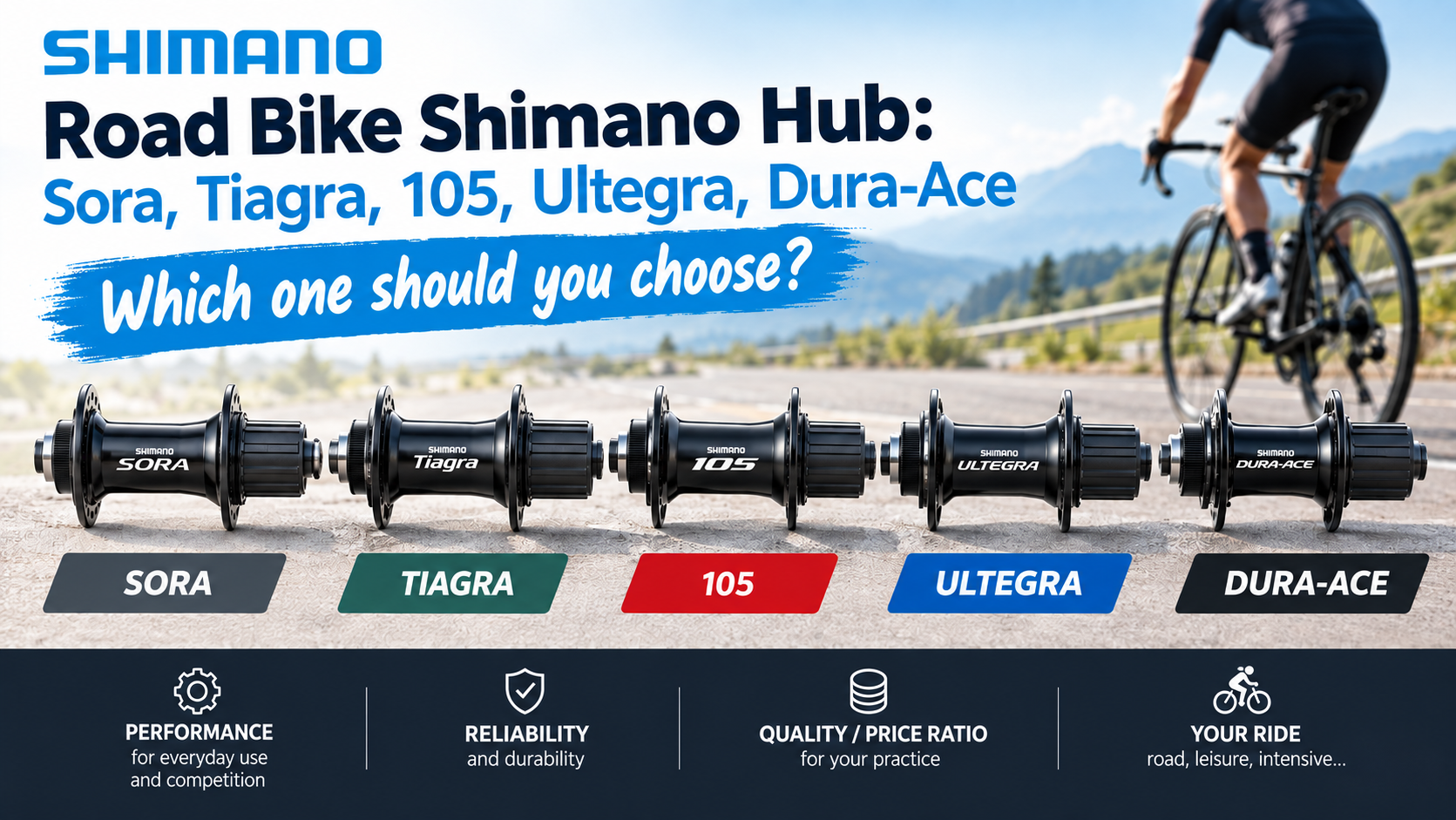
Shimano equips the vast majority of road bikes, and its hubs are known for their reliability and excellent compatibility. But between Sora, Tiagra, 105, Ultegra and Dura-Ace, it's easy to get lost. Here's a clear comparison to help you choose based on your riding and budget.
Browse our selection of Shimano hub road bike in stock.
1. Why choose a Shimano hub for your road bike?
Shimano is the most widespread standard on road bikes, across all ranges. This popularity brings a real advantage: near-permanent availability of spare parts, and an HG freehub body compatible with the vast majority of cassettes on the market, including some SRAM models up to 11-speed.
2. Shimano road hub ranges, from casual riding to racing
Sora and Tiagra: reliable entry level
These hubs equip beginner and casual bikes. Robust and easy to maintain, they favour mechanical simplicity over ultimate light weight.
105: the best value for money
The 105 range is often seen as Shimano's sweet spot: it carries over much of the technology from the higher ranges at a significantly lower price.
Ultegra: the performance/weight compromise
A step up, Ultegra targets demanding riders seeking noticeably lower weight and smoother rotation without jumping to top-tier pricing.
Dura-Ace: the racing flagship
Dura-Ace is Shimano's professional range, used in top-level road racing, offering the smoothest rotation and the lowest weight in the brand's lineup.
| Range | Recommended use | Technical priority | Budget |
|---|---|---|---|
| Sora / Tiagra | Casual riding, beginners | Robustness, easy maintenance | Affordable |
| 105 | Sportive, regular use | Best value for money | Moderate |
| Ultegra | Amateur racing | Light weight, smooth rotation | High |
| Dura-Ace | Racing | Maximum performance, minimum weight | Top-tier |
3. How to read Shimano references (HB, FH)?
On a product page or listing, Shimano hubs are identified by a prefix indicating their position on the wheel:
- HB (Hub Body): denotes a front hub
- FH (Free Hub): denotes a rear hub, fitted with its freehub body
This prefix is followed by a code identifying the range and generation (for example HB-RS400 or FH-R105).
4. Compatibility: the Shimano HG freehub body
Nearly all Shimano rear hubs use the HG freehub body standard, compatible with the majority of Shimano and SRAM cassettes up to 11-speed. This broad compatibility does have limits, though: 12-speed SRAM road drivetrains (XDR standard) and Campagnolo cassettes are not compatible with an HG freehub body. For more detail, see our article Road bike rear hub.
5. New or used Shimano hub: which references to pick?
Used is particularly appealing on higher Shimano ranges (Ultegra, Dura-Ace), where the new price can be a barrier. An inspected, rated used Ultegra or Dura-Ace hub gives you access to that performance at a much more reasonable budget. To understand our inspection process, see our article Used road bike hub.