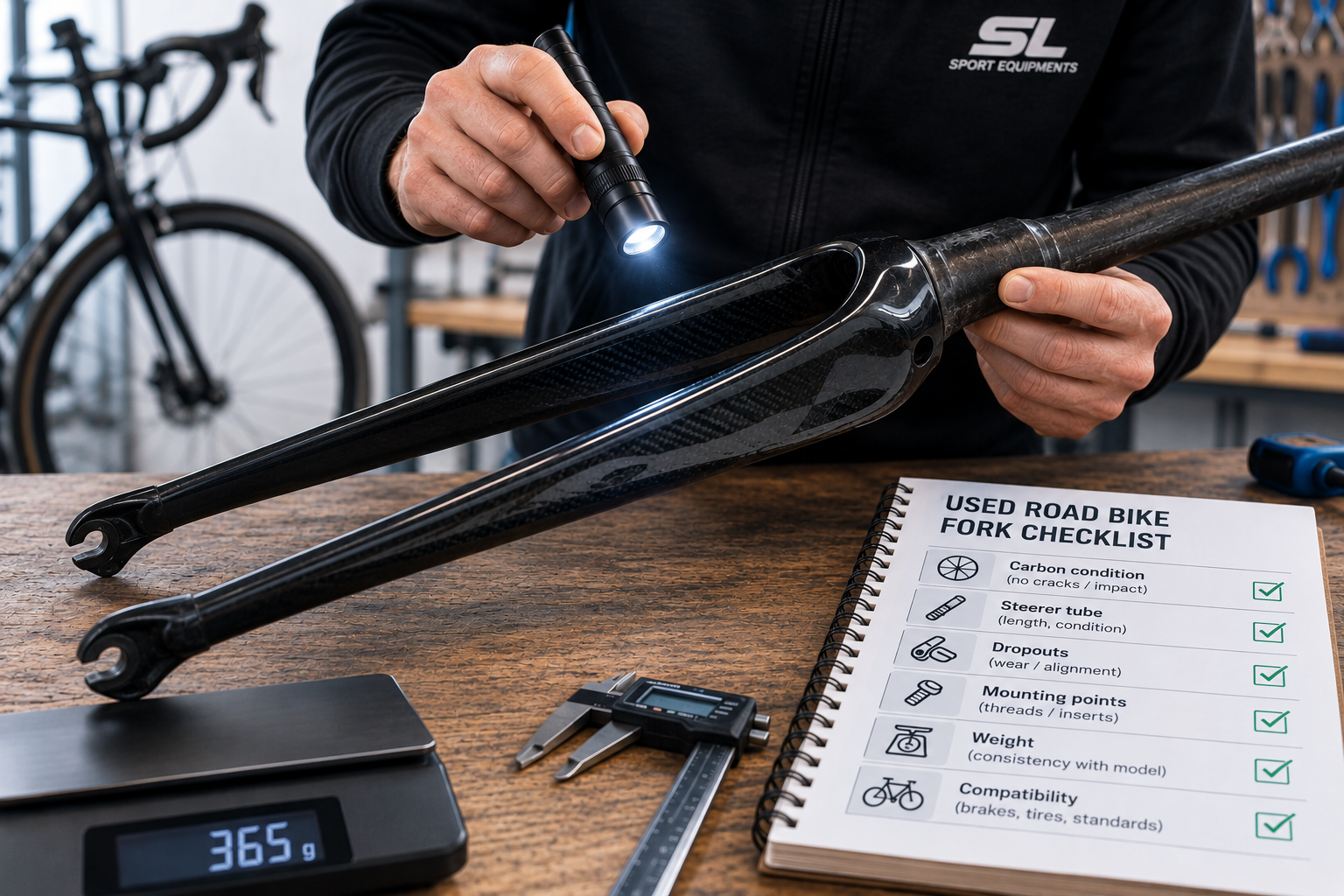
Buying a used road bike fork often gives you access to a high-end carbon model for a fraction of the price of a new one, or allows you to find a model that is no longer available. However, this saving comes with a legitimate concern: how can you make sure you are not buying a cracked or incompatible part, especially when purchasing online, where you cannot physically inspect the fork before ordering? This guide explains what we check for you at SL Sport Equipments, what you can inspect yourself upon receipt, and how to make sure the fork is compatible before placing your order.
For the general criteria to consider when choosing a 700C road bike fork (materials, braking system, steerer tube), see our 700C road bike fork catalog.
1. Why buy a used road bike fork from SL Sport Equipments?
Buying used gives you access to high-end carbon forks at a significantly lower price than new, which is particularly relevant for premium models that remain expensive when purchased new. It is also often the only way to find a discontinued model compatible with an older frame for which there is no equivalent in current product ranges. Without making this the main argument, buying used is also a more responsible approach, extending the useful life of a part that is still fully functional.
The difference compared with buying from a private seller: at SL Sport Equipments, every fork is inspected and graded before being listed for sale. You are not buying a part "blind" without knowing anything about it, but a part whose condition has already been checked by our team. The following sections explain exactly what this inspection involves.
2. Used carbon fork: what we check for you
Carbon naturally raises most of the concerns when buying used. Before being listed for sale, every carbon fork undergoes an inspection at our facilities, focusing primarily on the areas subject to the highest mechanical stresses:
- Visual inspection under angled lighting: the fork is examined under side lighting to reveal deep scratches, localized discoloration or superficial cracks, which are often difficult to see under direct lighting.
- Sound inspection: lightly tapping along the fork blades can help identify an unusual dull or hollow sound, which may indicate internal delamination.
- Priority inspection areas: the crown (the junction with the steerer tube), the lower sections of the fork blades near the wheel dropouts, and the steerer tube area.
When you receive your fork, you can carry out the same visual inspection yourself in just a few minutes for your own peace of mind. It is also the best way to familiarize yourself with the actual condition of the part before installation. To better understand why these areas are particularly sensitive, our article carbon vs aluminum vs steel fork explains the characteristics and behavior of composite materials.
3. Used aluminum or steel fork: the specific points we check
Aluminum and steel forks do not present the same risks as carbon forks, but they require their own specific checks. Here is what we inspect before listing them for sale, and what you can also check yourself upon receipt:
- Corrosion: particularly important to monitor on steel forks, especially around welds and areas that are difficult to access for cleaning.
- Visible deformation of the fork blades: a slightly bent or misaligned fork blade may indicate a previous frontal impact.
- Thread condition: on a threaded fork (often found on vintage models), make sure the threads are not damaged, as this could compromise stem installation.
- Impact marks on the fork crown: this is one of the areas most exposed in the event of a frontal crash.
Key takeaway: a steel or aluminum fork with minor cosmetic marks (faded paint, small superficial scratches) is generally still reliable. Structural deformation and advanced corrosion are the issues that should genuinely raise concerns.
4. Check compatibility before ordering
A fork in perfect condition is of no use if it is not compatible with your frame. Three points should always be checked before purchasing:
- Steerer tube diameter and length: this is the compatibility criterion most likely to cause errors. Consult our road bike fork steerer tube guide to identify the correct diameter (1", 1 1/8", tapered).
- Braking system: rim brakes or disc brakes are two non-interchangeable standards. Our article road bike fork: disc or rim brakes provides detailed guidance on the criteria to check.
- Tire clearance: if you ride with wider tires, make sure the fork you are considering provides sufficient clearance, as this can vary significantly from one model to another.
5. How we inspect each fork before offering it for sale
Every used fork offered in our store goes through the same process before being listed for sale: a visual inspection of the material based on the points detailed above, a check for any deformation or cracks, thorough cleaning, followed by the assignment of a condition rating from 1 to 10 that honestly reflects the actual wear of the part. This rating is displayed directly on the product page, so you know exactly what you are buying before placing your order.
If, despite these checks, a fork does not meet your expectations once you receive it, you have 14 days to return it to us. The goal of this process is simple: to allow you to buy used parts from our online store with the same peace of mind as buying new, without having to physically inspect the part yourself before making your decision.