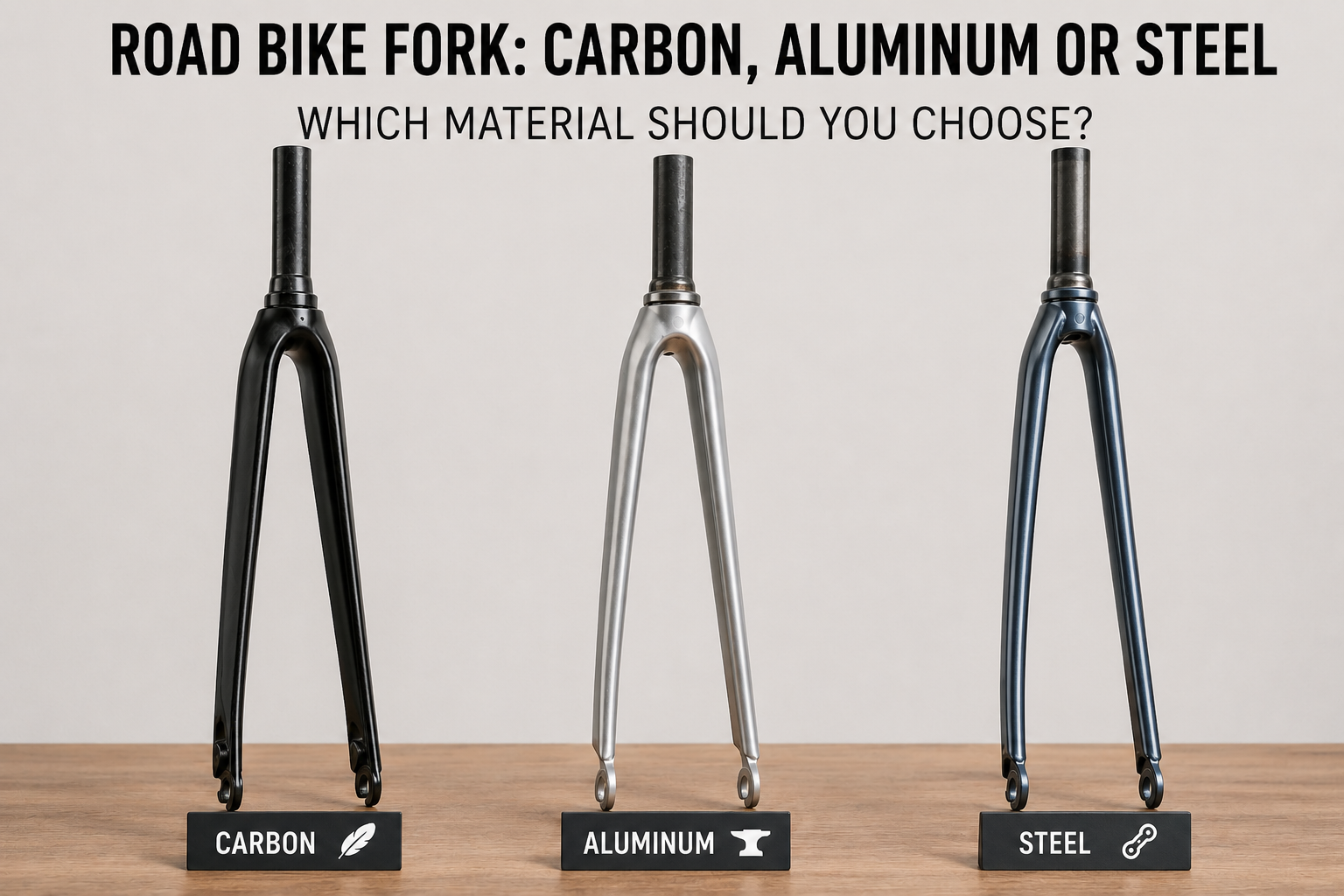
Carbon, aluminium or steel: the material is often the first criterion considered when choosing a road bike fork, even before braking or the steerer tube. But between common misconceptions and technical specifications, it can be difficult to know what really matters. This comparison looks at weight, price, comfort and durability for each material, providing practical benchmarks rather than relying on clichés.
For the general criteria involved in choosing a 700C fork (braking, steerer tube, tyre clearance), see our complete 700C road bike fork guide.
1. Carbon fork: lightweight design and riding comfort
Carbon remains the benchmark for demanding cyclists thanks to its excellent stiffness-to-weight ratio. Its composite structure also makes it possible to orient the fibres to absorb some of the vibrations transmitted from the road, which is a real advantage on long rides.
As a general guideline, a road bike carbon fork typically weighs between 350 and 450 g, depending on the range and braking system. One common misconception deserves to be corrected: when properly designed and correctly maintained, a carbon fork is not more fragile than a fork made from another material under normal use. The main point requiring attention is the steerer tube clamping, which must be tightened to a specific torque — a point covered in detail in our article on the road bike fork steerer tube.
Key takeaway: carbon does not mean fragile; it means that particular care is required during installation. Excessive tightening of the steerer tube or stem remains the leading avoidable cause of failure, well before normal material wear.
2. Aluminium fork: the versatile compromise
Although heavier than carbon, an aluminium fork remains reliable and stiff, while offering excellent value for money. It is a relevant choice for everyday use, regular recreational riding, or for equipping a second bike without investing in high-end equipment.
A road bike aluminium fork typically weighs between 500 and 650 g, only a few hundred grams more than a carbon fork, an additional weight that is often offset by a significantly more affordable price.
3. Steel fork: comfort and durability for vintage bikes
Less common today on modern bikes, steel forks remain popular with enthusiasts of vintage racing bikes and classic frames. They provide a smooth and pleasant riding feel, as well as excellent long-term durability, provided they are properly protected against corrosion.
Weight remains their main drawback compared with modern materials: expect 700 g or more, depending on the model and tube thickness. For an authentic restoration or a vintage bike project, however, steel is often the most consistent choice, both aesthetically and technically.
4. Comparison table: weight, price, comfort and durability
| Material | Approx. weight | Budget | Comfort (vibration absorption) | Durability |
|---|---|---|---|---|
| Carbon | 350 - 450 g | High | Very good | Good (with careful maintenance) |
| Aluminium | 500 - 650 g | Moderate | Good | Very good |
| Steel | 700 g and more | Variable (used / vintage) | Excellent | Excellent (when protected from corrosion) |
These weight figures are indicative ranges and vary depending on the manufacturer, product range and braking system (rim or disc brakes). See the details for each model on our 1 1/8" road bike carbon fork and road bike carbon fork pages.
5. Does fork weight really have an impact on performance ?
The weight difference between materials is real, but its impact is often overstated compared with other aspects of the bike. A few hundred grams on a fork make little difference compared with the wheels and tyres, the rider's position on the bike, or the cyclist's own training.
Keep in mind: before aiming for the lightest fork on the market, check whether other components of your bike (wheels, tyres, riding position) offer greater potential for improvement within the same budget.
6. Which material should you choose for your type of riding?
- Racing or demanding sportive events: carbon remains the benchmark choice thanks to its excellent weight-to-stiffness ratio and long-distance comfort.
- Regular riding, controlled budget: aluminium offers the best value-for-money compromise for frequent riding without breaking the bank.
- Vintage bike, restoration, comfort above all: steel remains consistent with the spirit of a classic frame and provides a distinctive riding feel.