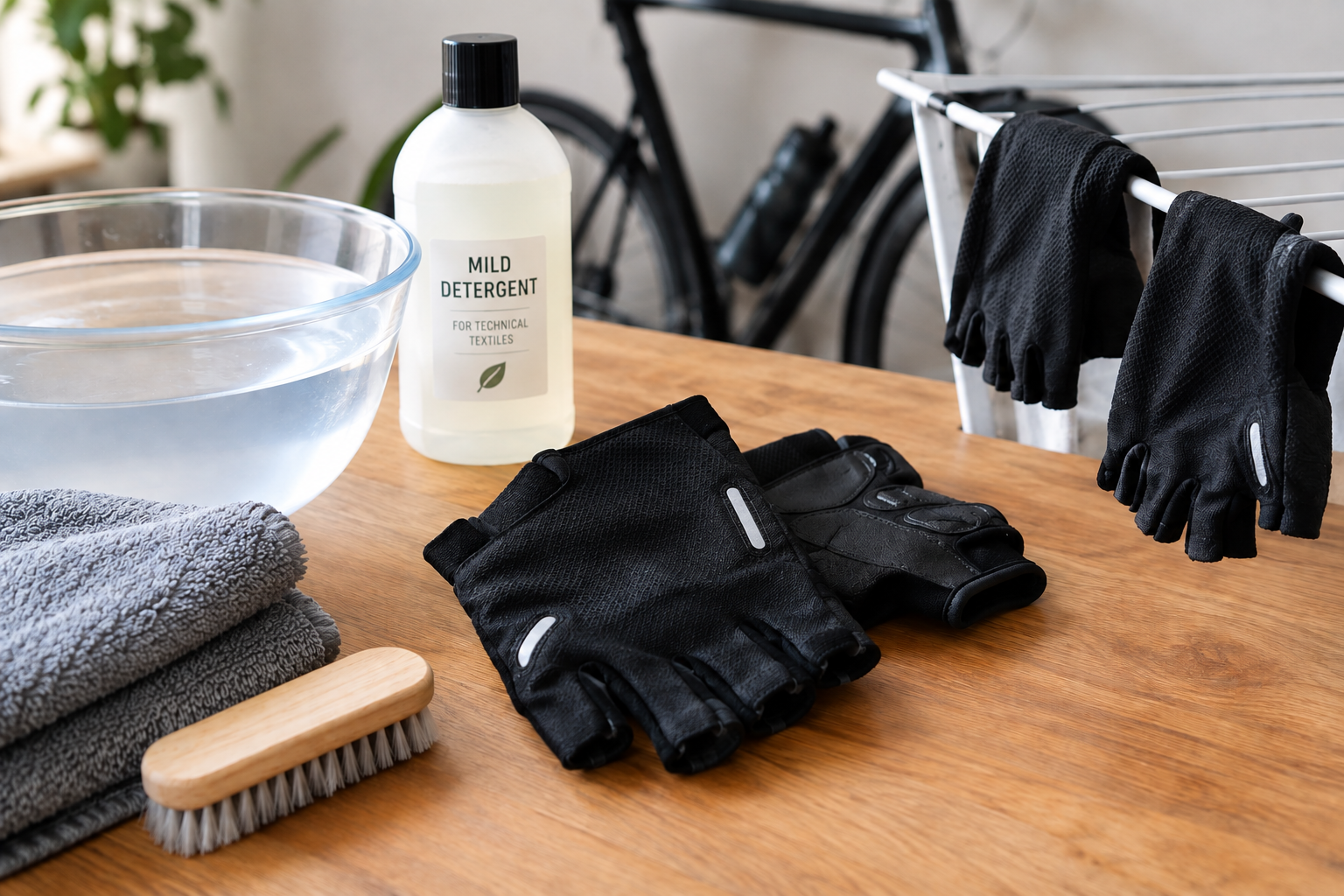
A few simple habits are enough to make a pair of gloves last several seasons instead of just one. Here are the right moves, from everyday washing to special cases with technical fabrics.
Check out our full range of road cycling gloves, either new clearance stock or checked second-hand pieces.
1. Why a poorly cared-for glove wears out faster
A cycling glove brings together several materials that are sensitive to poor care: synthetic padding compresses and loses its ability to absorb vibration, silicone grip zones harden and flake, and on technical models, windproof or waterproof membranes lose their effectiveness well before the fabric itself shows any visible wear. As a result, a badly washed glove can lose its qualities within a few months, whereas careful maintenance keeps it performing well for several seasons.
2. Washing: the right habits
After every ride: the quick routine
There's no need to wash your gloves after every single ride. A simple rinse under clean water is enough if they're not especially dirty, followed by air-drying flat, away from direct heat. Avoid balling them up damp at the bottom of a bag: it's one of the surest ways to speed up odours and degrade the fibres.
Deep cleaning
For a more thorough wash, two options depending on the model:
- By hand: lukewarm water (30°C / 86°F maximum), mild detergent, light rubbing without excessive wringing. This is the safest option and suits all types of gloves.
- Machine wash on a low temperature: only if the manufacturer's label explicitly allows it, and inside a laundry bag to prevent friction with other clothing.
Avoid fabric softener: it clogs technical fibres and reduces their breathability over time, which is especially counterproductive on a glove designed to wick away sweat.
What you should never do
Three mistakes come up most often, and can damage a glove permanently, sometimes after just one wash: the tumble dryer, which deforms the padding and weakens the elastics; prolonged direct sunlight, which speeds up the breakdown of synthetic materials and fades colours; and aggressive wringing, which distorts the glove's structure and can damage the palm seams, already under strain on every ride.
Worth remembering: when in doubt about the right method for your pair, the manufacturer's care label always takes priority over a general rule — recommendations vary noticeably from one model to another.
3. Special case: technical gloves (windproof, waterproof)
As mentioned in our winter gloves guide, windproof membranes and water-repellent treatments are more delicate than a simple summer fabric. Washing at too high a temperature, even by hand, can permanently affect their performance: above 30°C (86°F), some membranes lose part of their waterproofing capability irreversibly. Dry these models flat, never hung by a peg that would distort the structure, and let them return to room temperature before storing them away.
4. How to deal with odours
Persistent odours almost always come from the same combination: sweat trapped in synthetic padding that hasn't had time to dry fully between rides. Baking soda, left inside the glove overnight before shaking it out, effectively neutralises odours without damaging the fibres. The real preventive habit remains simple, though: never store a still-damp pair inside a closed bag, and ideally keep two pairs in rotation if you ride several times a week.
5. How long do well cared-for cycling gloves last?
This is exactly what makes proper care worthwhile economically: a correctly chosen pair of road cycling gloves, well maintained afterwards, can deliver several seasons of use, whether second-hand or new clearance stock. In our catalogue, every second-hand item is rated from 1 to 10 based on its condition at the time of listing — a well-rated glove, properly cared for afterwards, keeps its qualities well beyond a single season.
6. When should you replace your gloves?
Three signs indicate it's time to renew your pair, no matter how well they've been cared for: padding that's visibly flattened and no longer bounces back, palm seams starting to come apart, and a grip zone that has become smooth or cracked and no longer holds on the bar in wet conditions.