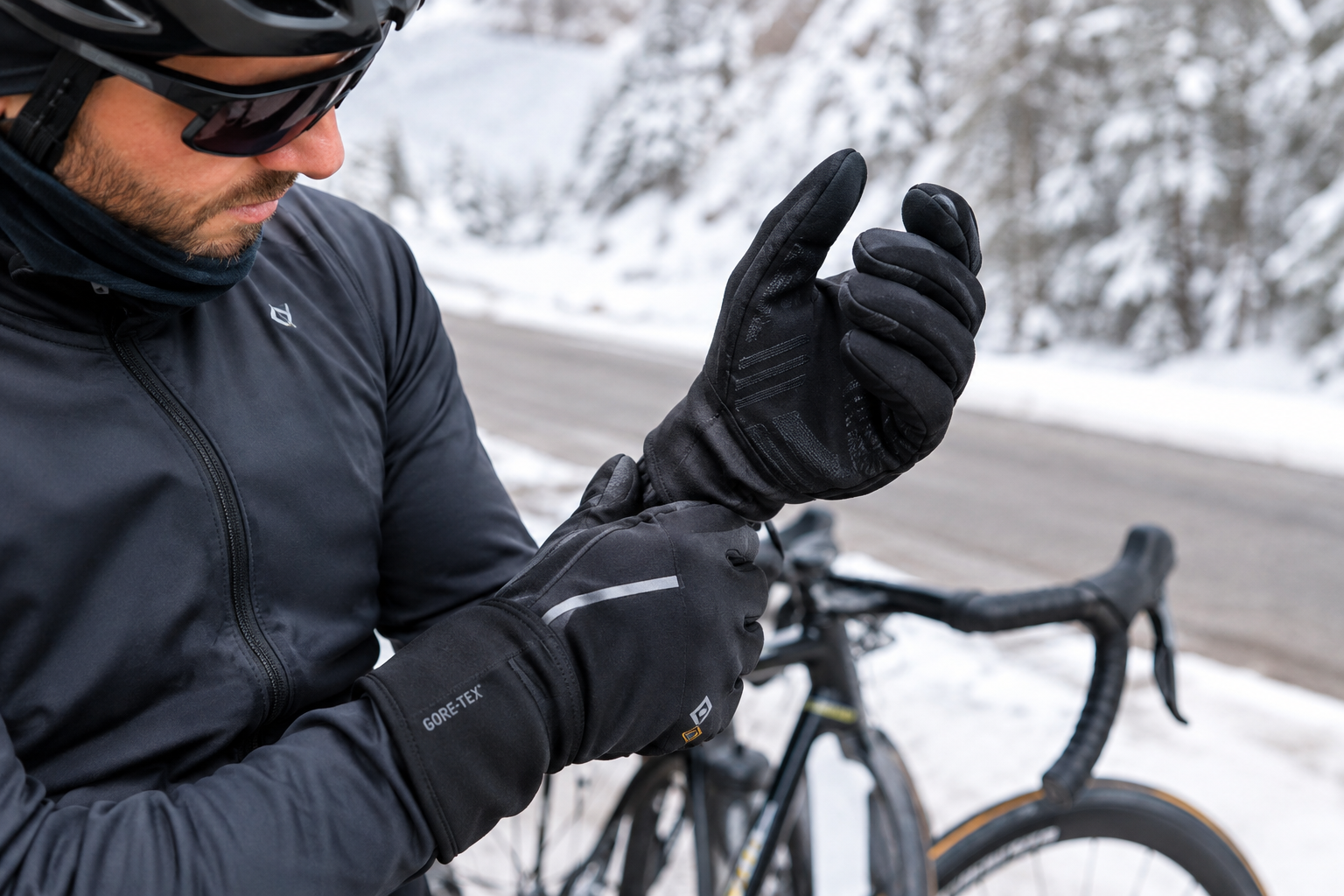
Below 10°C, the wrong choice of gloves quickly catches up with you: numb fingers, less precise braking, a ride cut short. Here are the criteria that really matter in cold weather.
Check out our full range of road cycling gloves, either new clearance stock or checked second-hand pieces.
1. Why hands are the first to suffer from the cold on a bike
Hands are among the areas most exposed to cold while cycling: little muscle mass to generate heat, a large area of skin in direct contact with the air, and above all a relative wind speed that accelerates heat loss far more than when standing still. Beyond simple discomfort, numb fingers react more slowly and less precisely on the brake levers and gear shifters — a safety issue that's too often underestimated as temperatures drop.
2. Mid-season long glove or true winter glove: don't get it wrong
We covered the difference between short and long gloves in our short vs long gloves guide; there's still a common confusion, though, between a mid-season long glove and a true winter glove. Here are some indicative temperature guidelines, to adjust based on your own sensitivity to cold and effort intensity:
| Temperature range | Recommended glove type |
|---|---|
| 5°C to 15°C (41-59°F) | Thin long glove, light windproof shell |
| 0°C to 5°C (32-41°F) | Insulated winter glove, thermal lining |
| Below 0°C (32°F) | Extreme cold glove or layered system (see below) |
3. The technical criteria of a good winter glove
Thermal insulation
The more insulated a glove is, the better it protects against cold — but the more it reduces dexterity on the brake levers and gear shifters. It's a real trade-off: an over-insulated glove suited to relaxed urban riding becomes a handicap on technical descents where precise braking matters most. The best approach is to choose the thinnest insulation that actually matches the temperature you'll ride in, rather than going overboard "just in case".
Wind resistance and waterproofing
A windproof membrane makes a much bigger difference to how a glove feels in winter than a simply thick fabric — it's often the membrane, more than the padding thickness, that makes the real difference on a cold ride. Be mindful of the real limits of water-repellent treatments, though: they shed light rain, but a prolonged downpour will always get through eventually, except on fully waterproof-breathable membrane models, which are rarer and more expensive.
Wrist length and sleeve overlap
An effective winter glove extends far enough up the wrist to slide under the jersey or jacket sleeve, avoiding any cold gap where the two meet. A wrist that's too short, even on an otherwise well-insulated glove, lets air in and cancels out part of the thermal benefit.
4. Dealing with extreme cold and freezing rain
Below 0°C, or in prolonged cold rain, a single glove is rarely enough. Two common solutions:
- Overshoes for hands (over-gloves): worn over a thinner glove, they add an extra windproof layer without fully sacrificing dexterity underneath.
- A layered system: a thin silk or merino liner glove, paired with a classic winter glove on top, gives you adjustable insulation as the weather changes mid-ride.
There's also the question of finger gloves versus mittens (or "lobster" gloves, with two fingers grouped together): mittens insulate noticeably better by keeping the fingers together, at the cost of noticeably reduced dexterity. They suit very cold rides well, where endurance against the cold matters more than precise control.
Safety note: in freezing conditions, test how responsive your fingers are on the brake levers before picking up speed. Overly numb hands slow reaction time, a real risk factor on descents.
5. Our winter models in stock
Our winter selection includes the BBB Coldshield gloves, specifically designed to block the wind on cold rides, and the Gist gloves, more focused on everyday thermal comfort. For good value, the Result R134X gloves and the Optimiz make solid entry-level options, currently available as new clearance stock at a reduced price.
Good to know: every pair is rated from 1 to 10 based on its condition, whether it's a new clearance-stock item or a checked second-hand piece — you know exactly what you're buying, with no surprises on arrival.
6. How to care for a winter glove so it keeps its performance
The windproof and water-repellent membranes on winter gloves are more delicate than a simple summer fabric: washing at too high a temperature, or putting them in a tumble dryer, can permanently damage their effectiveness. Hand-washing in lukewarm water and air-drying away from direct heat helps preserve these technical properties for much longer. We cover all the right steps in our cycling glove care guide.