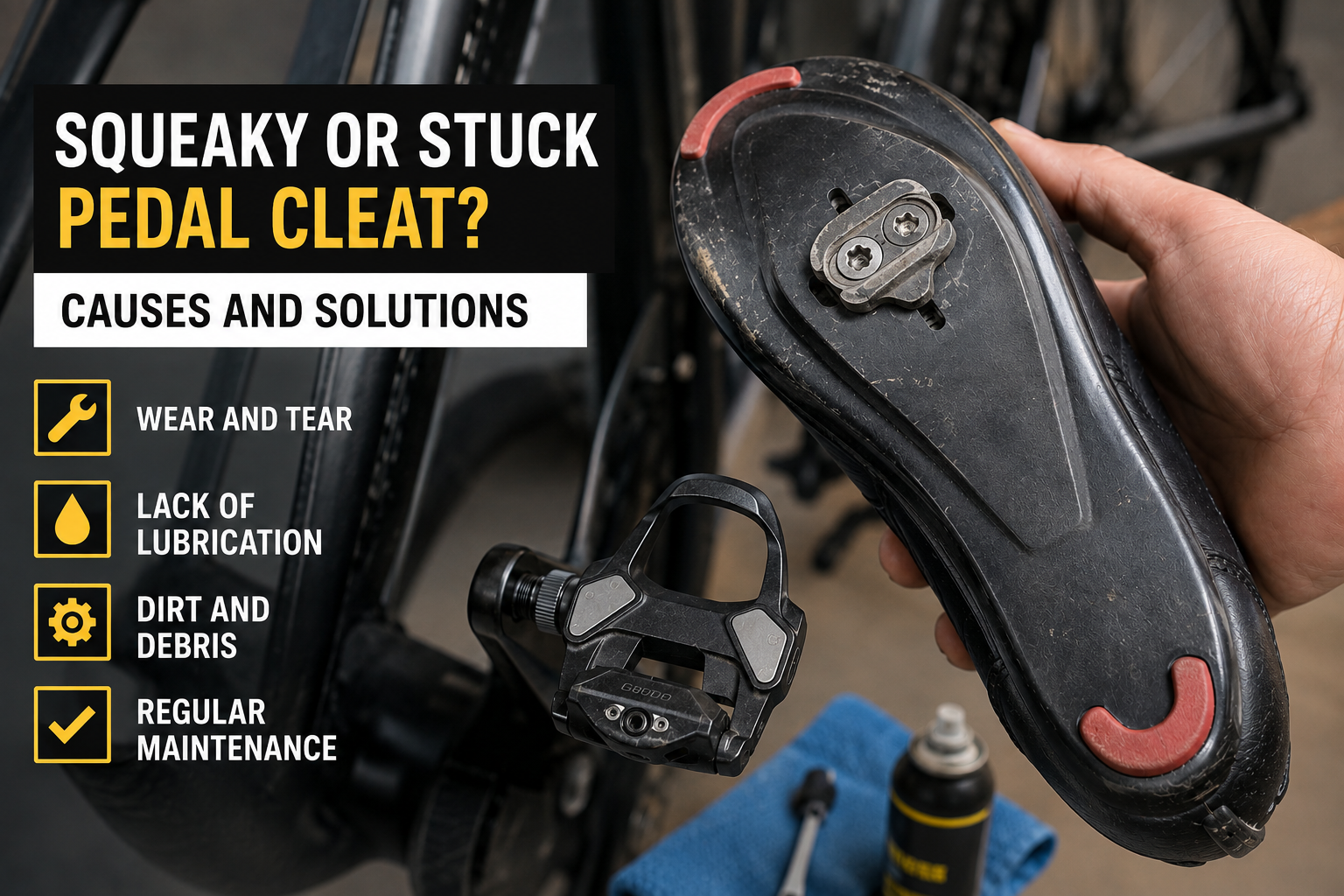
A squeaking or seizing pedal should never be ignored: it always indicates an abnormal point of friction, whether at the bearing, axle, cleat, or even the shoe. Ignoring this type of noise often means accelerating wear which, over time, can lead to axle failure or complete seizure of the clipping mechanism. The good news is that the diagnostic method remains the same regardless of your pedal brand, even though the solution will then vary depending on the system. This guide will help you identify the exact cause and fix it.
For general pedal maintenance (cleaning, lubrication, service life), see our complete road bike pedal guide.
1. Where does the noise come from: cleat, pedal, or shoe?
Before taking anything apart, the first mistake to avoid is assuming that the noise necessarily comes from the cleat, because it is the most visible component and the easiest one to replace. In reality, a squeak can come from three distinct areas: the pedal's internal mechanism (bearing, axle), the cleat attached underneath the shoe, or the shoe sole and its mounting screws.
A simple trick can help you start isolating the source: place the bike on a repair stand, or lift the rear wheel, and turn the crank by hand without clipping your foot in. If the noise persists under these conditions, it is very likely coming from the pedal mechanism (bearing or axle) rather than from the cleat-shoe interface.
Key takeaway: a noise that is present when the pedal is spinning freely, without a clipped-in foot, points to the pedal itself. A noise that only appears once the foot is clipped in points to the cleat or shoe. This simple distinction prevents you from replacing the wrong component.
2. Three-step diagnostic method
To go beyond the simple free-spinning test, a three-stage method can precisely identify the source of the noise before you start working on the bike.
- Free-spinning test: with the bike on a repair stand or the rear wheel lifted, turn the pedal by hand, without a clipped-in shoe. A noise at this stage points to the pedal bearing or axle.
- Loaded test: pedal out of the saddle on a false flat or a slight climb. If the noise only appears under this effort and not while seated, it is often caused by play or insufficient lubrication that only becomes noticeable under heavy load.
- Stationary clipping test: with your foot on the ground and the bike stationary, clip in and unclip several times in succession while listening and feeling for resistance. A sharp cracking sound or abnormal stiffness at this precise moment indicates the cleat or the pedal's clipping mechanism, not the bearing.
By cross-checking these three observations, you can generally determine with certainty whether the problem comes from the pedal body, the cleat, or a more peripheral point of friction such as the crankset.
3. Squeaking: the 4 most common causes
Once the source has been identified as mechanical (pedal or cleat), here are the most common causes, ranked from most frequent to least frequent.
1. Lack of lubrication on the axle or cleat spring
This is by far the most common cause, and the easiest to fix: a drop of light oil on the pedal axle and on the cleat spring mechanism is often enough to make an emerging squeak disappear. This procedure, described in our maintenance guide, is recommended every 2 to 3 months depending on how frequently you ride.
2. Worn cleat
A cleat with rounded engagement tabs or excessive play when clipping in can produce a slight squeak with every pedal stroke, in addition to the risk of unintended release already mentioned in our section on pedal maintenance. A quick visual inspection of the engagement tabs is often enough to confirm this cause within a few seconds.
3. Loose or corroded cleat bolts
Under the sole, the bolts securing the cleat can gradually loosen over time, creating slight play during each phase of the pedal stroke. Corrosion, encouraged by moisture, can also cause these bolts to seize and produce a squeak whenever the cleat moves slightly against the sole.
4. Poorly lubricated pedal/crank thread
Less common but possible: a squeak can also come directly from the thread between the pedal and crank, particularly if the pedal was installed without grease. This point is covered in detail in the section on pedal installation and thread direction in our road bike pedal guide.
4. Seizing: when the foot no longer clips in or out normally
Seizing differs from squeaking because it involves abnormal resistance when clipping in or, more importantly, when unclipping. Two levels of severity should be distinguished.
Minor seizing is characterized by a spring that feels stiffer than usual, often due to the accumulation of dirt or residue in the cleat mechanism. Cleaning with clean water followed by re-lubrication is generally enough to restore normal operation.
Severe seizing, where the pedal axle resists rotation or the mechanism remains stuck even after cleaning, usually indicates internal bearing wear, which requires partial disassembly or replacement.
Safety point: difficult unclipping is not just a matter of comfort. In the event of losing your balance while stationary (at a red light, due to an unexpected obstacle, etc.), a foot that does not release quickly enough can cause a fall. If you notice abnormal resistance when unclipping, deal with the problem before your next ride rather than waiting.
Mud, road salt used for de-icing in winter, and prolonged exposure to moisture in general are aggravating factors that accelerate this type of seizing. This reinforces the recommendation to clean your pedals regularly after riding in bad weather, as already discussed on our main guide page.
5. Solutions by system (Look, Shimano, Time)
Although the diagnostic method remains the same regardless of the brand, the typical point of seizing and the recommended action vary slightly depending on the system used.
| System | Typical seizing point | Recommended action |
|---|---|---|
| Look Keo | Retention blade spring at the rear of the pedal | Clean the blade and lightly lubricate the pivot point |
| Shimano SPD-SL | Side spring mechanism and rotating axle | Check the release tension, then lubricate the axle |
| Time Xpresso / Iclic | Moving part of the asymmetrical floating cleat | Check cleat wear first, before inspecting the pedal mechanism |
To learn more about the specific characteristics of each system, see our dedicated guides: Look road bike pedals, , and our Time road bike pedal guide.
6. When to replace rather than repair
Cleaning and re-lubrication solve the vast majority of squeaking and minor seizing issues. However, certain signs indicate that it is time to replace the component rather than continue trying to repair it:
- Persistent lateral play at the axle even after lubrication.
- A bearing that continues to catch or resist despite thorough cleaning.
- A visibly deformed cleat, with rounded or cracked engagement tabs.
- High mileage: as indicated on our main guide page, cleats should generally be replaced every 5,000 to 10,000 km depending on use, while a well-maintained mid-range pedal can last between 30,000 and 50,000 km.
Once these mileage thresholds or signs of advanced wear have been reached, replacement remains the most reliable solution, both for pedaling comfort and safety.