-
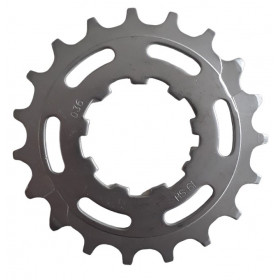
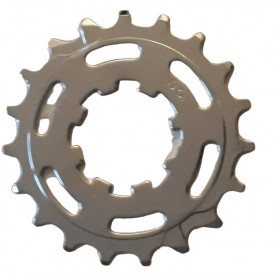 New product -65%Sprocket Miche compatible with Campagnolo 9s 10s
- €2.45
- €6.99
Road bike sprocket: how to choose it properly, ensure compatibility, and replace it
The road bike sprocket is an essential part of the drivetrain: it directly affects pedaling smoothness, gear shifting quality, and overall efficiency on the road. Often associated with the road bike cassette, it plays a key role in adapting pedaling effort to terrain, whether climbing, riding on flat roads, or sprinting.
Understanding how it works and knowing how to choose or replace it helps you maintain long-term performance and efficiency on a road bike.
How to choose the right road bike sprocket
Choosing a road bike sprocket mainly depends on your riding style and terrain. A cyclist riding in mountainous areas will not need the same gearing as someone focused on long, flat endurance rides.
The first criterion is gear development. A larger sprocket makes pedaling easier on climbs, while a smaller sprocket allows higher speeds on flat terrain. The choice is therefore closely linked to the road bike cassette, since both work together to define the overall gear range.
Cadence is also important. Riders who prefer a high cadence will benefit from a cassette with smoother, more progressive gear steps, improving transitions between gears and pedaling comfort.
Finally, build quality matters. Brands such as Shimano, SRAM, and Campagnolo offer precise and durable tooth profiles, which are essential for maintaining smooth performance on a road bike sprocket under stress.
Compatibility of a road bike sprocket with the drivetrain
Compatibility is a critical factor when selecting a road bike sprocket. Not all systems are interchangeable, even when they look similar.
The first thing to check is compatibility with the freehub body. Each manufacturer uses its own standards: Shimano and SRAM often share similar compatibility ranges, while Campagnolo uses its own specific system.
You must also ensure compatibility with the chain and the road bike cassette. A 10-, 11-, or 12-speed drivetrain requires matching sprockets with precise spacing to ensure smooth and accurate shifting.
Wear is another often overlooked factor. A worn sprocket can cause chain skipping and accelerate cassette wear. Regular inspection of the drivetrain is therefore strongly recommended.
How to replace a road bike sprocket
Replacing a road bike sprocket or a road bike cassette is a relatively simple operation with the right tools and method. It helps restore shifting quality and prevent power loss.
First, remove the rear wheel. Once the wheel is off, you can remove the cassette using a cassette lockring tool and a chain whip to hold the system in place.
After removing the old sprockets, it is important to clean the freehub body thoroughly to remove dirt and residue. This improves the lifespan of the new setup.
Reassembly is done by stacking the sprockets in the correct order, making sure all spacers are properly positioned. Once tightened, the new road bike cassette provides smooth and precise shifting.
Finally, derailleur adjustment may be necessary to ensure perfect alignment and eliminate noise or skipping.
Conclusion
The road bike sprocket is a central component of road cycling performance. Choosing it correctly, ensuring compatibility with your drivetrain, and knowing how to replace it are essential for maintaining a high-performing and enjoyable bike.
When paired with a properly selected road bike cassette, it helps optimize every ride, regardless of the terrain.
Road bike cassettes :
10 speed road bike cassette
Road bike cassette for mountain
There are 2 products.