-
 New product
 New product
 Used
Used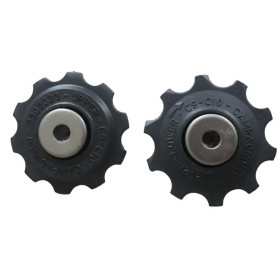 New product -35%Tenshion & guide pulley set Campagnolo 9s
- €17.60
- €27.07
 New productDerailleur Sunrace M2T
- €7.49
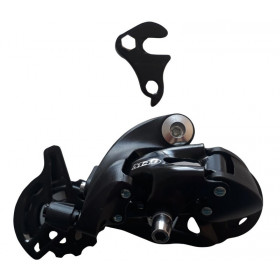 New product -55%Rear derailleur Sunrace M41 7s long cage
- €9.00
- €19.99
Rear derailleur: everything you need to know about this key component of a bike’s drivetrain
The rear derailleur is one of the most important parts of a bike’s drivetrain. Essential for smooth gear changes, it controls chain tension and guides it precisely across the cassette sprockets. Whether you’re a beginner cyclist or a bike mechanic enthusiast, understanding the role and features of a rear derailleur will help you optimize performance and maintain your bike more effectively.
What is a rear derailleur ?
Located at the back of the bike, the rear derailleur is an articulated mechanism connected to the shifters by a cable (or an electronic signal on modern groupsets). Its main function is to move the chain from one sprocket to another, allowing you to adapt your gear ratio depending on the terrain: climbing, descending, or riding on flat roads.
Main characteristics of a rear derailleur
A rear derailleur can be identified by several technical aspects:
-
The cage: short, medium, or long, it determines the derailleur’s capacity to handle a wide range of chainring and cassette sizes.
-
Compatibility: each derailleur is designed for a specific number of speeds (7, 8, 9, 10, 11, 12, or 13-speed groupsets).
-
Mounting type: most attach to the derailleur hanger on the frame, but some special models mount differently.
-
Tension spring: keeps the chain taut to prevent skipping and derailments.
-
Material: steel, aluminum, or carbon depending on the range, affecting weight and stiffness.
Modern rear derailleur technologies
With the evolution of drivetrain systems, rear derailleurs now include advanced features:
-
Clutch mechanism: reduces chain slap, particularly useful for MTB and gravel riding.
-
Electronic shifting: such as Shimano Di2, SRAM AXS, or Campagnolo EPS, enabling precise, effortless gear changes.
-
Wide-range compatibility: some derailleurs can handle cassettes with very large sprockets (up to 50 teeth or more), making steep climbs easier.
Choosing the right rear derailleur for your riding style
-
Road bikes: focus on light weight and precision, with a cage suited to your cassette.
-
MTB: opt for a durable derailleur with a clutch system to avoid chain drops.
-
Gravel or touring bikes: prioritize versatility and the ability to manage wide gear ranges.
-
E-bikes: make sure the derailleur is designed to handle the extra torque and power of the motor.
Maintenance and adjustment of the rear derailleur
A properly tuned rear derailleur ensures smooth shifting and extends the life of your drivetrain. Key points to check regularly:
-
Cable tension and correct adjustment of limit screws.
-
Alignment of the derailleur hanger.
-
Cleanliness and lubrication of the chain.
-
Wear of the derailleur pulleys.
In summary
The rear derailleur is a central element of the bike drivetrain, combining mechanical precision with modern innovation. When chosen wisely and properly maintained, it guarantees smooth shifting, improves pedaling efficiency, and increases the durability of your components.
There are 7 products.
