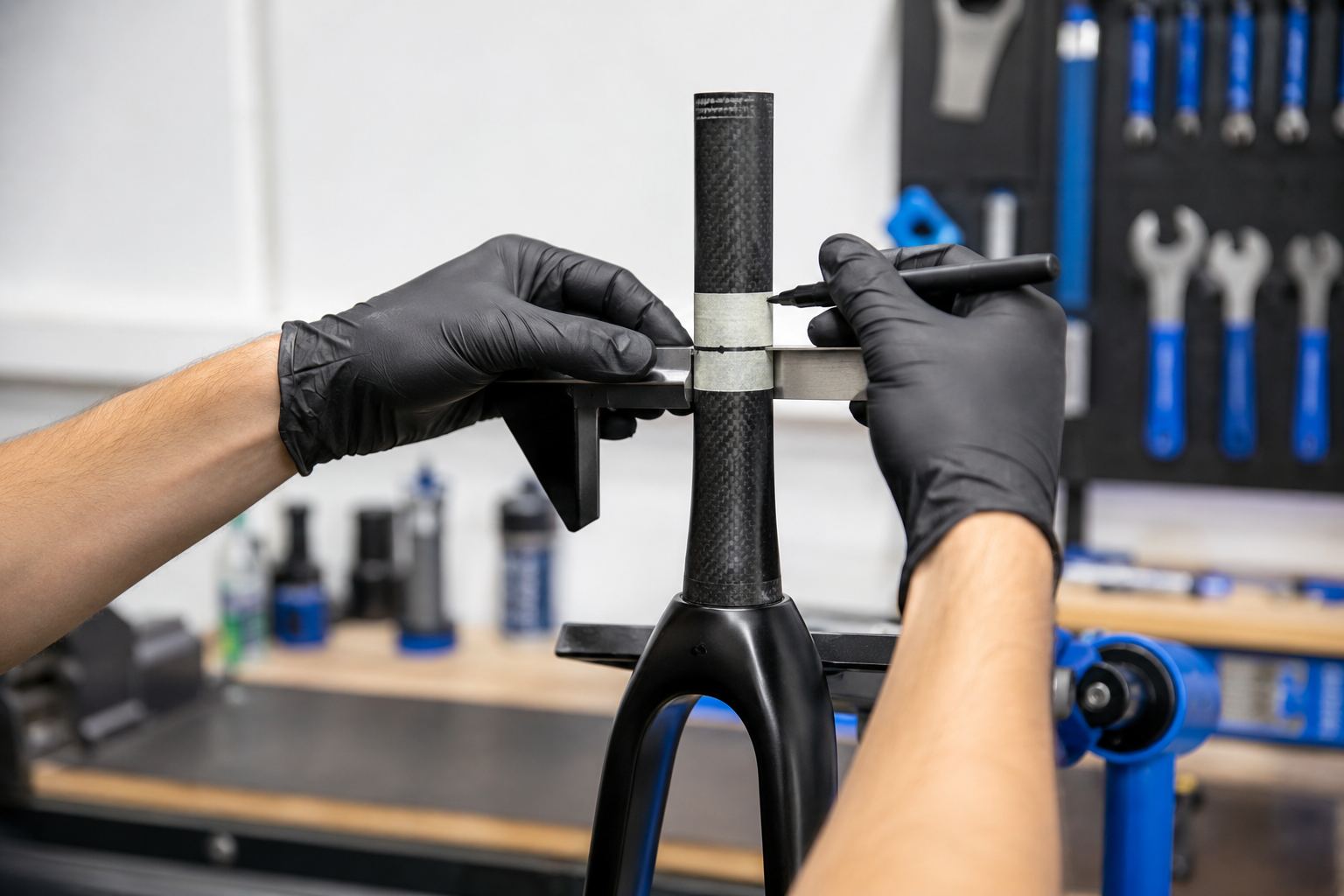
A new or used carbon fork almost always comes with a steerer tube that is longer than necessary, which needs to be adjusted to suit your frame size and desired handlebar height. Cutting the steerer is a straightforward task if the proper precautions are taken, but it is irreversible, so it is best to proceed methodically. Here is the step-by-step procedure.
Before cutting anything, make sure you have correctly identified the diameter and length of your steerer tube using our road bike fork steerer tube guide. For other criteria to consider when choosing a 700C fork, see our complete 700C road bike fork guide.
1. Before cutting: accurately measure the required length
Measuring is the most important step in the entire process, because a steerer tube that has been cut too short cannot be lengthened again. Refer to our article on the fork steerer tube for the correct method for measuring its diameter and length.
Key point: always allow a safety margin of a few millimeters rather than cutting the steerer as short as possible. This extra length will allow you to add another spacer later if necessary, for example to raise your riding position slightly.
Never skip the test assembly step: install the fork, stem and desired spacers without fully tightening them, so you can accurately determine where the top of the stem will sit once the assembly is complete. This reference point, rather than a theoretical measurement, should be used as the basis for marking the cut.
2. Essential tools for a clean and safe cut
- Fine-toothed saw suitable for carbon: a fine-toothed hacksaw, or ideally a saw specifically designed for composite materials, helps minimize carbon fiber splintering.
- Cutting guide: this tool fits around the steerer tube and ensures a perfectly perpendicular cut, which is essential for a clean stem installation.
- Adhesive tape: wrapped around the cutting area, it helps prevent carbon fibers from splintering during sawing.
- Protective mask and safety glasses: carbon fiber dust can irritate the respiratory tract and eyes, so appropriate protection is recommended.
3. Step-by-step cutting procedure
- Test assembly: install the fork, stem and desired spacers without fully tightening them, to determine the actual steerer length required.
- Mark the cutting line: accurately mark the cutting point just above the top of the stem, taking the safety margin into account.
- Protect the cutting area: wrap adhesive tape around the cutting area to help prevent fiber splintering during sawing.
- Install the cutting guide: position it over the marked line and secure it firmly to ensure a straight, perpendicular cut.
- Sawing: cut slowly and without forcing the saw, allowing the tool to guide the blade rather than applying excessive pressure.
- Finishing: lightly deburr the cut edge and carefully remove any remaining carbon fibers before proceeding with the final assembly.
4. Mistakes to avoid at all costs
Important safety points: never cut without first carrying out a test assembly, as an incorrect steerer length cannot be corrected. Do not use an unsuitable saw with coarse teeth, as this can cause the carbon fibers to splinter. Do not neglect respiratory protection while sawing. Finally, never cut the steerer flush with the stem without leaving any safety margin: doing so would eliminate any possibility of future adjustment.
5. Should you have it done by a professional ?
If you have any doubts about the measurements, tools or procedure, having the work carried out by a professional bike shop remains the safest option. The job is quick for an experienced professional with the right equipment, and it eliminates the risk of making an irreversible cutting mistake. Choosing this option is not an admission of limited technical ability: unlike other bike adjustments, an improperly cut steerer tube cannot be corrected.