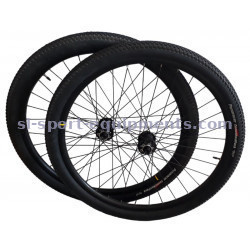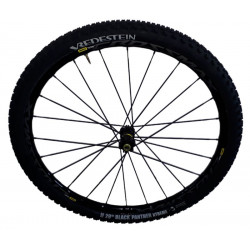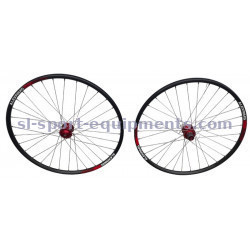
Wheel circumference is the single most important number for setting up a bike computer, a GPS device or a cadence/speed sensor correctly. On a mountain bike, it depends on the nominal wheel size — 26 inch, 27.5 inch (650B) or 29 inch (29er) — but also on the exact tire width you run. This guide gives you the full 26, 27.5 and 29 inch MTB wheel circumference chart in millimetres and inches, the wheel diameter for each size, the formula to calculate it yourself, and the values to enter on your bike computer. For the wheels themselves, browse our 26 inch, 27.5 inch and 29 inch MTB wheel ranges.
1. MTB wheel circumference chart at a glance
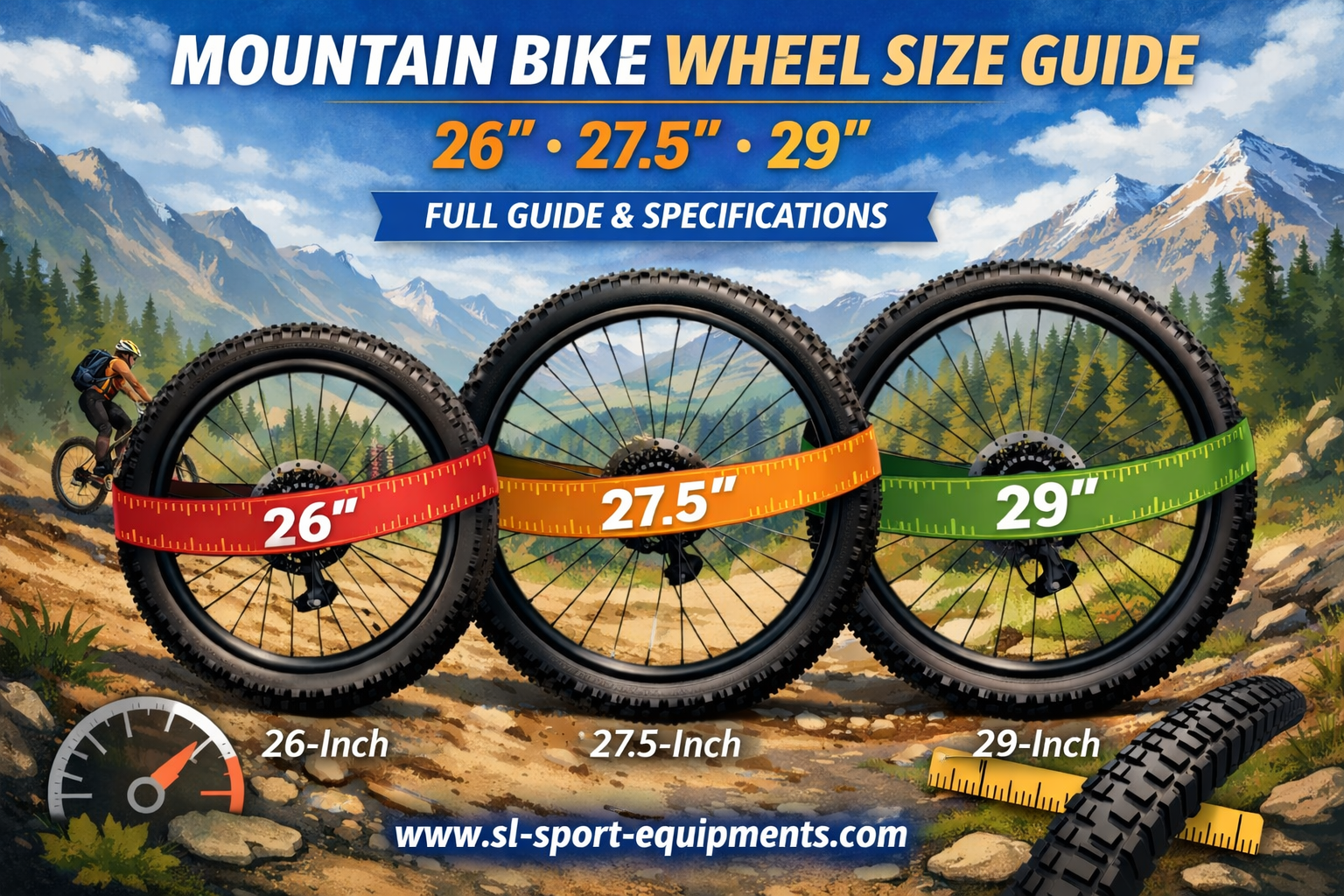
Before going into detail for each tire width, here is a quick bicycle wheel circumference chart comparing the three main MTB wheel sizes. Use it to get an instant estimate, then check the detailed tables below for your exact tire.
| Wheel size | ETRTO nominal diameter | Typical circumference range | Best suited for |
|---|---|---|---|
| 26 inch | 559 mm | 1995 – 2085 mm (78.5 – 82.1 in) | Agility, dirt, trial, technical trails |
| 27.5 inch (650B) | 584 mm | 2155 – 2245 mm (84.8 – 88.4 in) | All-round trail, enduro, best compromise |
| 29 inch (29er) | 622 mm | 2288 – 2355 mm (90.1 – 92.7 in) | Cross-country, momentum, obstacle clearance |
Good to know: the ETRTO diameter (559 / 584 / 622 mm) is fixed for a given wheel size and never changes. What varies from bike to bike is the tire width, which is why you always need to check the exact circumference for your own tire rather than relying on a single generic number.
2. Why wheel circumference matters
Wheel circumference is the distance travelled in one full wheel rotation. It is the key value for:
- Correctly configuring a wired or wireless bike computer;
- Improving the accuracy of GPS data (distance, speed, cadence);
- Adjusting drivetrain gearing to match wheel behaviour;
- Comparing wheel sizes before choosing or upgrading your MTB.
An incorrect circumference setting leads to a bike computer or GPS overestimating or underestimating the distance and speed of every ride, which skews all your training data.
3. How to calculate or measure your wheel circumference
There are two reliable ways to get an accurate value: calculate it from the wheel diameter, or measure it directly on your bike.
The calculation formula
Circumference = π × Diameter (π ≈ 3.1416)
Example: a 27.5 inch wheel with a tire diameter of about 700 mm gives a circumference of 700 × 3.1416 ≈ 2200 mm — matching the value for a 27.5x2.25 tire in the chart below.
The roll-out measurement method
For the most accurate, tire-specific value (which accounts for your exact tire model, pressure and load), measure it yourself:
- Mark a point on your tire (or align the valve stem) and mark the corresponding point on the ground.
- Roll the bike forward in a straight line, with the rider's weight on it, until the mark completes one full rotation and touches the ground again.
- Measure the distance between the two ground marks in millimetres — this is your wheel's real circumference.
Watch out: tire pressure, tread depth and rider weight all slightly change the effective circumference. The values in the charts below are reliable estimates for setup purposes, but the roll-out method remains the most precise if you need exact data for racing or navigation.
4. 26 inch MTB wheel circumference chart (mm & inches)
The 26 inch MTB wheel remains a classic standard, valued for its agility and maneuverability. Its ETRTO nominal rim diameter is 559 mm. Here is the full 26 inch wheel circumference in mm chart by tire width, including the total wheel diameter:
| Tire size (26") | ETRTO | Wheel diameter | Circumference (mm) | Circumference (in) |
|---|---|---|---|---|
| 26 x 1.90 | 47-559 | 635 mm | 1995 mm | 78.5 in |
| 26 x 2.00 | 50-559 | 640 mm | 2010 mm | 79.1 in |
| 26 x 2.10 | 54-559 | 645 mm | 2025 mm | 79.7 in |
| 26 x 2.20 | 56-559 | 651 mm | 2045 mm | 80.5 in |
| 26 x 2.30 | 58-559 | 654 mm | 2055 mm | 80.9 in |
| 26 x 2.40 | 60-559 | 659 mm | 2070 mm | 81.5 in |
| 26 x 2.50 | 62-559 | 664 mm | 2085 mm | 82.1 in |
Values are approximate reference figures and can vary slightly by tire brand, tread pattern and inflation pressure.
Specific features of 26 inch MTB wheels
- Nominal ETRTO diameter: 559 mm.
- Compatible with both disc brakes and V-brakes.
- Generally stiffer than larger wheels, which improves stability on rough, technical terrain.
- Lighter overall, which benefits acceleration and quick handling — still popular for dirt, trial and pump track disciplines.
- Gradually replaced by 27.5" and 29" on new bikes, but widely available on the second-hand market.
5. 27.5 inch MTB wheel circumference chart (mm & inches)
The 27.5 inch (650B) wheel has become the most popular all-round MTB size, balancing the agility of the 26" with the rollover of the 29". Its ETRTO nominal rim diameter is 584 mm. Here is the 27.5 inch wheel circumference in mm chart by tire width:
| Tire size (27.5") | ETRTO | Wheel diameter | Circumference (mm) | Circumference (in) |
|---|---|---|---|---|
| 27.5 x 1.90 | 47-584 | 686 mm | 2155 mm | 84.8 in |
| 27.5 x 2.00 | 50-584 | 690 mm | 2168 mm | 85.4 in |
| 27.5 x 2.10 | 54-584 | 694 mm | 2180 mm | 85.8 in |
| 27.5 x 2.20 | 56-584 | 697 mm | 2190 mm | 86.2 in |
| 27.5 x 2.25 | 57-584 | 700 mm | 2200 mm | 86.6 in |
| 27.5 x 2.30 | 58-584 | 703 mm | 2210 mm | 87.0 in |
| 27.5 x 2.35 | 60-584 | 707 mm | 2220 mm | 87.4 in |
| 27.5 x 2.40 | 61-584 | 710 mm | 2230 mm | 87.8 in |
| 27.5 x 2.50 | 64-584 | 715 mm | 2245 mm | 88.4 in |
Values are approximate reference figures and can vary slightly by tire brand, tread pattern and inflation pressure.
Specific features of 27.5 inch MTB wheels
- Nominal ETRTO diameter: 584 mm.
- Better maneuverability than 29" wheels — great for technical trails and enduro riding.
- Smoother rolling and more comfort than 26" wheels.
- Compatible with wide tires for improved traction and grip.
- A balance between quick acceleration, adhesion and obstacle clearance, which explains its popularity across most riding styles.
6. 29 inch MTB wheel circumference chart (mm & inches)
The 29 inch (29er) wheel is now the reference for cross-country and many trail bikes, thanks to its rolling momentum. Its ETRTO nominal rim diameter is 622 mm — the same as a 700c road wheel, though tire profiles differ. Here is the 29 inch wheel circumference in mm chart by tire width:
| Tire size (29") | ETRTO | Wheel diameter | Circumference (mm) | Circumference (in) |
|---|---|---|---|---|
| 29 x 2.00 | 50-622 | 728 mm | 2288 mm | 90.1 in |
| 29 x 2.10 | 54-622 | 731 mm | 2295 mm | 90.4 in |
| 29 x 2.20 | 56-622 | 735 mm | 2310 mm | 90.9 in |
| 29 x 2.25 | 57-622 | 737 mm | 2315 mm | 91.1 in |
| 29 x 2.30 | 58-622 | 738 mm | 2320 mm | 91.3 in |
| 29 x 2.35 | 60-622 | 743 mm | 2335 mm | 91.9 in |
| 29 x 2.40 | 61-622 | 745 mm | 2340 mm | 92.1 in |
| 29 x 2.50 | 63-622 | 750 mm | 2355 mm | 92.7 in |
Values are approximate reference figures and can vary slightly by tire brand, tread pattern and inflation pressure. Note: a 700c road wheel shares the same 622 mm ETRTO diameter but uses narrower road tires, which gives a different circumference — see our road bike wheels guide for road-specific values.
Specific features of 29 inch MTB wheels
- Nominal ETRTO diameter: 622 mm.
- Better traction thanks to increased ground contact surface.
- Easier obstacle clearance over roots, rocks and steps.
- Higher rolling momentum, ideal for maintaining speed on long or rolling sections.
- Compatible with tubeless tires, wide rims and boost hubs; the preferred choice for XC, trail and many enduro riders.
7. Setting your bike computer or GPS wheel size
Whether you ride with a Garmin, a Wahoo, a Sigma (such as the BC 512) or a Bosch e-bike display, the setup step is the same: enter the wheel circumference in millimetres, never the diameter. Use the value that matches your exact wheel size and tire width from the charts above, or your own roll-out measurement for maximum accuracy.
| Wheel & common tire | Value to enter (mm) | Compatible with |
|---|---|---|
| 26 x 2.10 | 2025 | Garmin, Wahoo, Sigma, most wired/wireless computers |
| 27.5 x 2.25 | 2200 | Garmin, Wahoo, Sigma, Bosch e-bike displays |
| 29 x 2.25 | 2315 | Garmin, Wahoo, Sigma, Bosch e-bike displays |
Tip: on Garmin and Wahoo devices, the wheel size is usually entered automatically once you select your tire size from a preset list, but you can always override it manually with the exact millimetre value for better accuracy. On Sigma and Bosch units, the setting is typically found under "wheel circumference" or "WU" (wheel size) in the setup menu.
8. Which wheel size should you choose ?
| Riding profile | Recommendation | Why |
|---|---|---|
| Dirt, trial, pump track, smaller riders | 26 inch | Maximum agility, stiffer wheel, easier to throw around |
| All-round trail, enduro | 27.5 inch (650B) | Best balance of agility, comfort and rollover |
| Cross-country, long rolling trails, momentum | 29 inch | Better traction and obstacle clearance, holds speed |
| Mixed use, undecided | 27.5 inch (650B) | Widest tire and part choice, easiest to find spares for |
9. MTB wheel vocabulary you should know
- Rim: the rigid metal or carbon ring that holds the tire.
- Tire: the rubber casing (tubed or tubeless) that contacts the ground.
- Width (section): the tire's width, e.g. 2.25 or 2.40 inches.
- ETRTO: the international sizing standard expressed as width-diameter, e.g. 57-584 for a 27.5x2.25 tire.
- Tread: the surface pattern of the tire that grips the terrain.
- Knobs: raised tread elements for better traction on loose or rough ground.
- Pressure: the air pressure inside the tire, which affects comfort, grip and effective circumference.