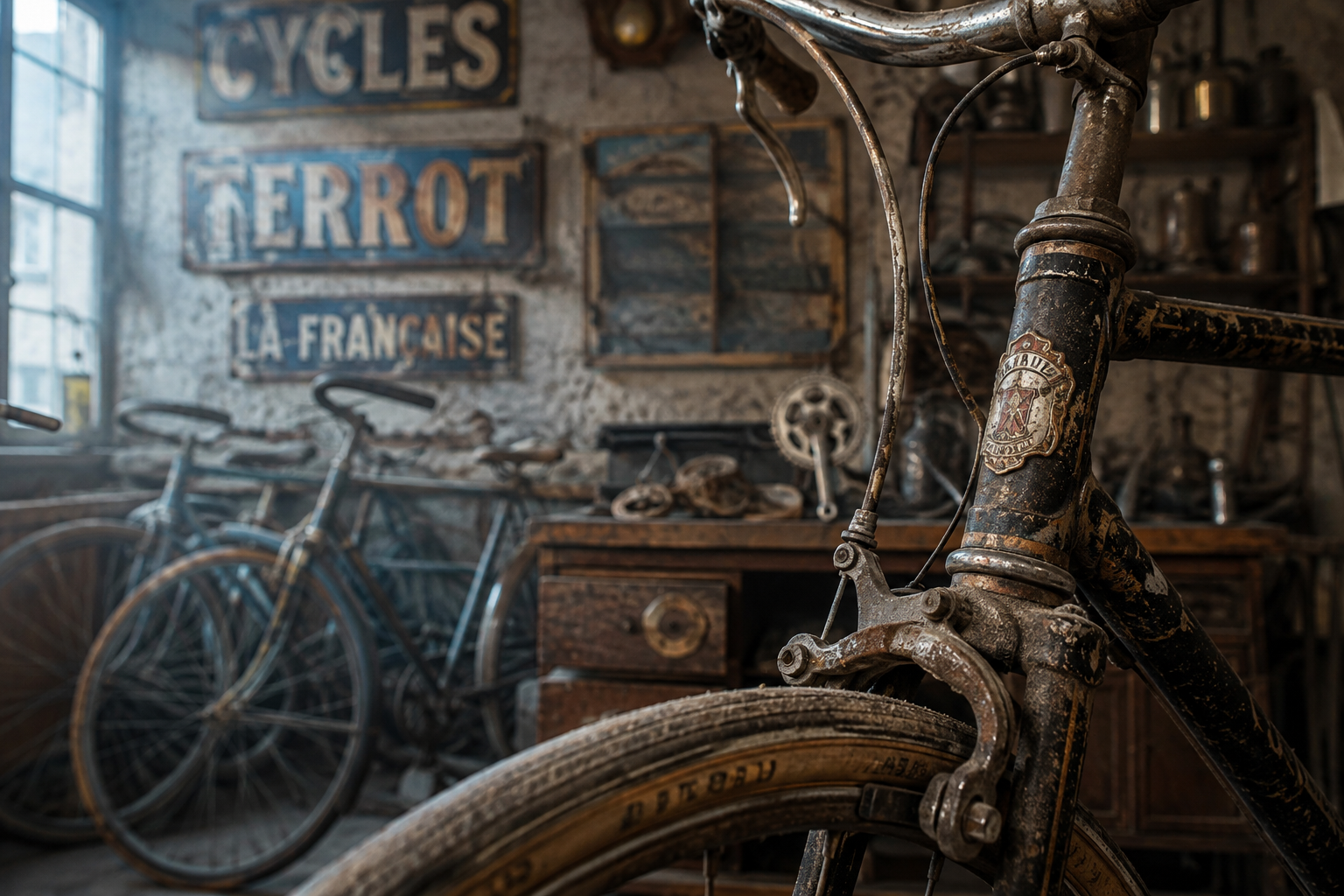
From French racing marques to British club-cycling institutions and American carbon pioneers, the history of cycling is full of vintage bicycle brands and old bike brands that once dominated the market — and then vanished, were bought out, or quietly reinvented themselves. This guide brings together the complete list of the most iconic vintage and disappeared bicycle brands, classified by country and by decade, along with what actually happened to each of them.
1. Why do vintage and old bicycle brands disappear?
Very few of the marques that shaped 20th-century cycling are still trading under their original ownership. Most old bicycle brands disappeared for the same handful of reasons: the post-war decline of hand-built cycling in favour of cars and motorbikes, the 1970s-80s "bike boom" that briefly inflated demand before Asian mass-production undercut small workshops on price, and a wave of consolidation that saw independent marques absorbed one after another by larger industrial groups (Raleigh, Cycleurope, Tandem Group, TI Group).
A brand rarely disappears overnight. In most cases the name survives — sold, licensed, or folded into a conglomerate — while the original workshop, craftsmanship and spirit that made it famous are gone. That is exactly what happened to most of the brands below.
Good to know: a "disappeared" bicycle brand hasn't necessarily stopped existing. It has often been bought out, renamed, or repositioned in a different market — as with Peugeot Cycles (still sold under licence), Motobécane (now a separate US company) or Raleigh (still trading, but under new ownership since the original went into administration).
2. The most iconic vintage & disappeared bicycle brands
Here is the full list of the vintage bicycle brands and old bike brands that marked their eras, grouped by country of origin.
2.1 French vintage brands
- Motobécane (founded 1923): famous for lightweight, affordable racing bikes as well as mopeds. After financial difficulties, the original French company disappeared in 1981; the name was later taken over by an American manufacturer offering bikes very different from the originals.
- Peugeot Cycles (founded 1882): immensely popular in the 1970s and 1980s, Peugeot bicycles have almost disappeared from the main ranges, even though the Peugeot brand still exists in the automotive sector. The name survives under licence, but the models that marked cycling enthusiasts no longer exist.
- Gitane (popular from the 1960s to the 1980s): a renowned French brand that equipped legendary cyclists and became known for its road bikes. Gitane was integrated into the Cycleurope group, but its production has declined significantly and it no longer has the international influence it once had.
- Mercier (founded 1919/1921): together with Peugeot, Mercier ran one of the longest-standing teams in the Tour de France, from 1935 to 1984. Like most of its French rivals, Mercier could not adapt fast enough to Asian mass-production and filed for bankruptcy in 1985; the brand has since resurfaced mainly on cycling apparel rather than complete bicycles.
- Pyrenea Sport: founded by the José Alvarez group, this French brand disappeared in the early 2000s.
- Rando Cycles: a framebuilder based in the Paris region, specialising in the design and manufacture of touring bikes.
2.2 Classic British bicycle brands
The UK has one of the richest histories of vintage bike brands in the world, largely built around club racing and hand-built lightweight frames. Several of the most searched-for classic bicycle brands are British:
- Raleigh (founded 1887): grown into one of the world's largest bicycle brands, with iconic models like the Chopper and various racing bikes. Although the name persists, production has been refocused and the original spirit has evolved under new owners.
- Carlton Cycles (founded 1898, Worksop): a small, family-run maker of hand-built racing bikes that earned a reputation good enough to attract Raleigh, which bought Carlton in 1960 to give itself a genuine hand-built, competition-grade range. The Carlton factory built Raleigh's most prestigious frames until it closed in 1981.
- Claud Butler (founded 1928, London): the premier marque among British hand-made enthusiasts' cycles at the height of club cycling. The company failed after the Second World War and was sold to rival Holdsworth in 1958. The Claud Butler name changed hands several times afterwards and is today produced by Falcon Cycles, a division of Tandem Group.
- Holdsworth (founded 1927, Putney): built its reputation on the "Aids to Happy Cycling" mail-order catalogue and a dominant professional team co-sponsored with Campagnolo through the 1960s-70s. Holdsworth acquired both Claud Butler and Freddie Grubb in the 1950s, but was itself in decline by the late 1980s and eventually passed, together with Claud Butler, to Tandem Group.
- Dawes Cycles (founded 1926, Birmingham): best known for the Galaxy touring bike launched in 1971, still considered a benchmark model today. Dawes is one of the few names on this list still trading, now owned by Tandem Group, although production moved overseas after a 1990 change of ownership.
2.3 American & international brands
- Schwinn: an iconic American brand that left its mark on generations with popular bikes like the Sting-Ray. After several bankruptcies and takeovers, the brand moved into the mass-distribution segment and its emblematic models are no longer produced as originally designed.
- Bianchi USA: although Bianchi still exists in Italy, its American subsidiary — which offered models adapted to the North American market — has ceased operations. Bianchi remains strong in Europe, but the American segment has been largely restructured.
- Kestrel (founded in the USA in the 1980s): a pioneer of carbon-composite construction, Kestrel built its reputation on triathlon and time-trial bikes such as the Kestrel 4000, ridden by professional teams in major international events. The brand was bought by Advanced Sports International in 2007, passed through the 2019 bankruptcy of ASE (which also owned Fuji, Performance Bicycle and Bike Nashbar), and today belongs to BikeCo, owned by Hong Kong-based Advanced Holdings.
- Topbike: a French brand of mountain bikes, hybrid bikes and road bikes sold in supermarkets.
To remember: a lot of these brands weren't beaten by bad products — Carlton, Holdsworth and Claud Butler in particular were considered among the best hand-built frames of their era. What killed them was the economics of mass production, not a lack of craftsmanship.
3. Vintage bicycle brands by decade (1950s–1990s)
Looking for 1970s bicycle brands, 1980s bicycle brands, or which vintage bicycle brands were popular in a specific decade? Here is a quick reference by era.
| Decade | Leading brands | What defined the era |
|---|---|---|
| 1950s | Raleigh, Carlton, Claud Butler (pre-1958) | Golden age of British hand-built steel lightweights and club racing; the post-war decline in cycling begins. |
| 1960s | Peugeot Cycles, Gitane, Holdsworth-Campagnolo team, Carlton (under Raleigh) | Booming French road racing culture; Raleigh consolidates rival British marques under one roof. |
| 1970s | Motobécane, Mercier, Dawes (Galaxy launched 1971) | The "bike boom" — a surge in US and European demand for road and touring bikes. |
| 1980s | Bianchi USA, Schwinn, Motobécane (ceased 1981), Mercier (bankruptcy 1985) | Rise of aluminium frames and Asian mass-production; several historic marques file for bankruptcy. |
| 1990s | Kestrel, Topbike | Carbon composite frames go mainstream in racing and triathlon; supermarket-distributed MTBs expand the mass market. |
4. What happened to them? Buyouts, closures and revivals
Beyond the classic vintage names, a handful of more recent brands are also frequently searched for under "what happened to…" — a sign that even 21st-century bicycle brands aren't immune to the same forces that ended their vintage predecessors.
| Brand | What happened | Current status |
|---|---|---|
| Schwinn | Filed for bankruptcy in 1992 and again in 2001, changing owners several times. | Owned by Pacific Cycle (Dorel), sold mainly through mass retailers. |
| Bike Nashbar | Bought by Performance Bicycle in 2000, then absorbed into Advanced Sports Enterprises (ASE), which filed for bankruptcy in 2018. | Brand discontinued after the 2019 ASE liquidation. |
| Kestrel | Part of the same ASE group as Bike Nashbar; survived the 2019 bankruptcy under new ownership. | Still trading today under BikeCo. |
| Niner | A pioneer of 29in wheel mountain bikes, Niner filed for bankruptcy in 2017 and was bought by United Wheels (owner of Huffy) in 2018. | Operations paused by United Wheels in 2026 while its future is reassessed. |
| Cleary Bikes | US-based children's bike brand known for lightweight, kid-specific geometry. | Closed permanently in late 2024. |
5. Are any of these brands still around today ?
Yes — several historic cycling brands are still relevant today, just not always in the form collectors remember. Raleigh, Peugeot Cycles, Motobécane and Dawes all still exist as trading names, but under different owners, with production largely moved overseas and ranges refocused on hybrid, electric and entry-level bikes rather than the hand-built racing frames that made them famous. Others, like Carlton, Claud Butler under its original form, and Bike Nashbar, have genuinely ceased to exist as independent companies, surviving only as a badge on a rebadged product or as a name owned by a much larger group such as Tandem Group or Cycleurope.
This is precisely why vintage and old bike parts remain in demand: a vintage frame or fork carries the craftsmanship of a brand and an era that current mass-produced ranges, even under the same name, no longer offer.
[productlist category="272" nbr="4"]