-
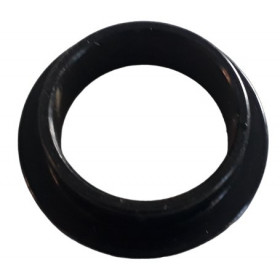 New productChainring spacer
- €1.80
 New product
 New product
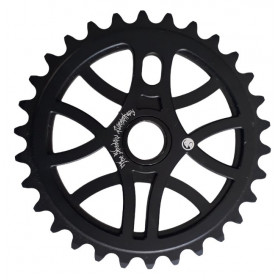 New product -30%BMX chainring 30 teeth The shadow conspiracy
- €31.49
- €44.99
 New product
 New product
 New product
 New product
 New product
 New product
Looking for a BMX freestyle chainring to replace a worn part, switch to a lighter gearing or adapt your BMX to your riding style (street, park, flatland)? Browse our selection of freestyle chainrings above. Filter by tooth count, mounting system, material and brand to find the model that fits your cranks and your driver.
Which BMX freestyle chainring should you choose?
Tooth count and gear ratio
In freestyle, a compact chainring is preferred: it gives more ground clearance, better protects the teeth during grinds and makes tricks easier. The most common sizes are around 25 and 28 teeth, paired with a 9 or 10-tooth driver. The gear ratio is the chainring's tooth count divided by the driver's:
- 25/10 (2.50): light gearing, smooth pedalling and easy acceleration in the park.
- 25/9 (2.78) and 28/10 (2.80): the most common compromise for all-round use.
- 28/9 (3.11): longer gearing, for riders who want more speed on the street or in a bowl.
The right ratio also depends on your build, your level and your terrain. Find the formula and reference tables in our article: gear ratio calculation and table.
Mounting system
The chainring must be compatible with your cranks. The most common freestyle mounting systems are:
- Spline drive: the chainring slides onto a splined spindle, mainly on 3-piece cranks.
- Bolt drive: the chainring is secured with bolts, on cranks designed for this system.
- One-piece cranks: the chainring sits on the right crank's spindle using its centre hole and the interface point with the crank.
Also check your cranks' spindle diameter (19 mm or 22 mm depending on the model) before ordering: a chainring made for one spindle will not fit the other.
Chain and driver
Most freestyle BMX bikes use a 1/2" x 1/8" chain. Pair your chainring with a driver or freewheel whose tooth count suits your ratio, and make sure the chainline stays straight to avoid chain skips mid-trick.
Chainring materials and protection
- Aluminium: lightweight, and the most common material for a BMX freestyle chainring.
- Steel: heavier, but very resistant to impacts and repeated grinds.
- Chainring with guard: some models include a protective ring (guard) that shields the teeth during grinds.
On a freestyle BMX the chainring takes frequent hits: choose a sturdy model and check the teeth regularly.
When should you replace your BMX freestyle chainring?
Replace your chainring when:
- the teeth are pointed, bent or chipped after grinds;
- the chain skips despite correct tension;
- the chainring is cracked or warped after an impact;
- you want to change your gearing for a new terrain or riding style.
If the chain is worn, replace it at the same time: a stretched chain quickly wears out a new chainring.
New or refurbished used BMX freestyle chainrings
We offer chainrings from clearance stock for new parts, and refurbished used parts. Each chainring is cleaned and inspected (scratches, wear on the teeth and mounting points) and given a condition rating from 0 (very poor, for parts only) to 10 (new in packaging).
BMX freestyle chainring FAQ
How many teeth should a BMX freestyle chainring have?
25-tooth and 28-tooth chainrings are the most common, paired with a 9 or 10-tooth driver. A 25-tooth chainring gives lighter pedalling and more ground clearance, while a 28-tooth chainring gives longer gearing.
What gear ratio should you use on a freestyle BMX?
Common ratios range from 2.5 to 3.1, for example 25/9 (2.78) or 28/10 (2.80). Divide the chainring's teeth by the driver's to get your ratio, then adjust it to your build and riding style.
What is the difference between a spline drive and a bolt drive chainring?
A spline drive chainring slides onto a splined spindle, while a bolt drive chainring is secured with bolts. They are not interchangeable: the right one depends on your cranks.
How do you know if a BMX chainring fits your cranks?
Identify your crank type (3-piece or one-piece), note the spindle diameter and the mounting system of your original chainring. These three criteria determine which chainring is compatible.
Should you replace the chain at the same time as the chainring?
It is recommended if the chain is stretched. A worn chain speeds up wear on a new chainring and can cause chain skips.
There are 11 products.
