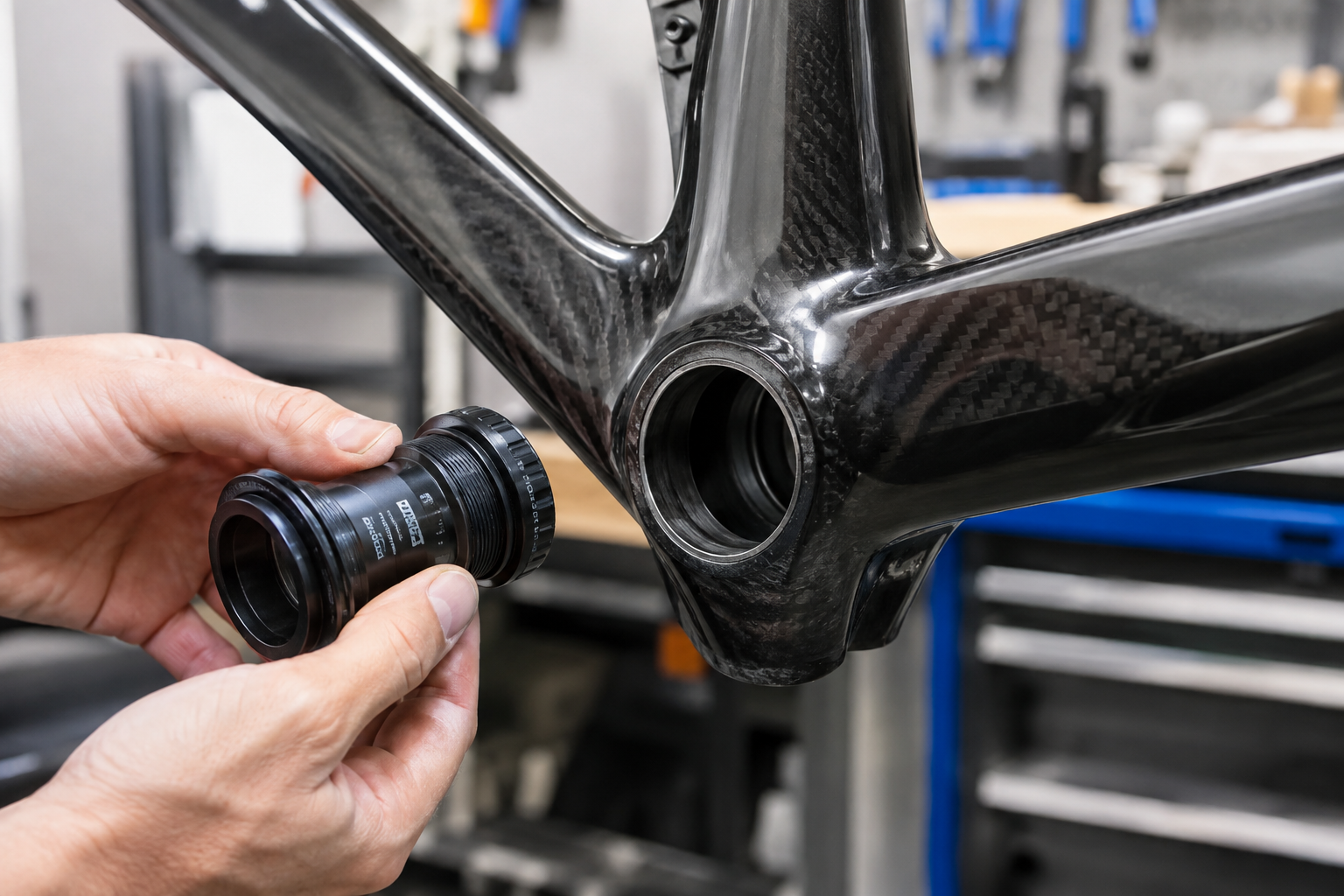
A carbon frame is a significant investment, and the idea of pressing or screwing a bottom bracket directly into it can understandably cause concern. Good news: with the right precautions, this job doesn't carry any risk specific to carbon. Here's what you need to know before you start.
Discover our range of road bike bottom brackets and road bike drivetrain groups in stock.
1. Does carbon require special precautions?
Unlike steel or aluminium, carbon doesn't deform under stress in the same way. It doesn't "absorb" excessive tightening or a misaligned press-fit as well as a metal frame, with a real risk of micro-cracking or delamination (separation of the fibre layers) if the fitting process goes wrong. That said, this needs nuance: carbon isn't more fragile in normal use once the bottom bracket is properly installed. It's mainly during the fitting or removal process that extra care is needed.
2. Which bottom bracket standards fit carbon frames?
Modern carbon frames mostly use press-fit standards (BB86, BB92, BB30, PF30), which allow for a wider bottom bracket tube and therefore added stiffness. Some models, however, still use a standard threaded shell of the BSA type, moulded into a composite reinforcement built into the frame. The standard depends primarily on the specific frame model, not simply on the fact that it's made of carbon: to identify and understand the exact dimensions of press-fit standards, see our guide to BB30, PF30, BB86, BB92 press-fit standards.
3. Precautions when fitting a bottom bracket on a carbon frame
- Never force it if you feel unusual resistance while pressing or screwing: unusual resistance usually signals misalignment, which should never be overcome by force.
- Strictly follow the manufacturer's recommended torque, even for a threaded bottom bracket fitted into a composite reinforcement.
- Use a properly aligned, suitable press for press-fit fitting, never an improvised setup with unsuitable tools.
- Clean and inspect the shell before fitting, to spot any issue (residue, burrs) before installing the new bottom bracket.
Note: unusual resistance during pressing should never be forced. It's better to stop and check alignment than risk damaging the bottom bracket shell.
4. What warning signs should you watch for after fitting on a carbon frame?
Several signs deserve particular attention after installing a bottom bracket on a carbon frame:
- An unusual creak appearing right after fitting, as distinct from a classic wear-related creak, which develops gradually after several months of use.
- Unusual resistance or noticeable play that wasn't there before the job.
- Visible signs of cracking or delamination around the bottom bracket shell: a sign to take very seriously, requiring a prompt professional inspection.
Good to know: if your bottom bracket creaks with no link to a recent fitting, our article on the causes and solutions for a creaking bottom bracket will help you diagnose the issue.
5. Should you have the job done by a professional on a carbon frame?
Fitting a bottom bracket on a carbon frame remains achievable for a DIY-minded cyclist equipped with the right tools and following the precautions described above. That said, if in doubt, without the right tools, or on a very high-end frame where the financial risk of a mistake is significant, taking the bike to a workshop remains the safest option.
6. FAQ — Bottom bracket and carbon frame
Road bike bottom bracket guides — go further
- Road bike bottom bracket — full range
- Threaded or press-fit bottom bracket: which one should you choose?
- Bottom bracket creaking: causes and solutions
- How to remove and replace your road bike bottom bracket
- BB30, PF30, BB86, BB92: understanding press-fit standards
- Shimano 105 vs Ultegra vs Dura-Ace bottom bracket
- Ceramic bottom bracket: real performance gain or marketing hype?