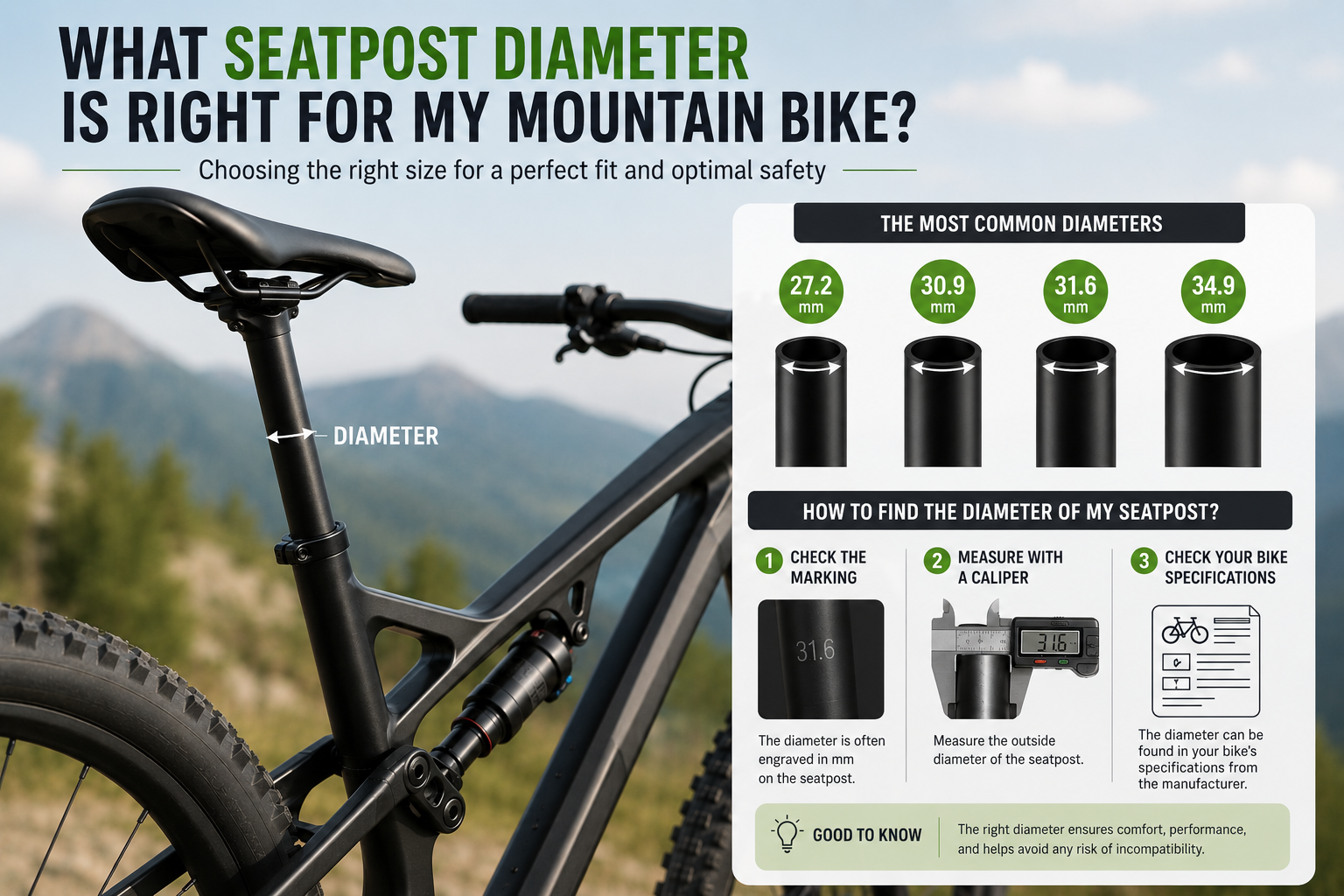
The most common mistake when buying a seatpost: ordering without checking your seat tube's exact diameter first. The result is a post that either won't fit or sits loose in the frame. This guide helps you identify your diameter in under two minutes, and understand the specifics of mountain bikes.
Browse our full range of MTB seatposts in stock, in all diameters.
1. The most common MTB seatpost diameters
Unlike road cycling, where two diameters (27.2 and 30.9 mm) cover the vast majority of frames, mountain biking spans a wider range of diameters, reflecting the diversity of riding styles and frame materials:
| Diameter | Typical use |
|---|---|
| 27.2 mm | Lightweight XC frames, particularly thin carbon |
| 30.9 mm | The most widespread across all uses, compatible with most dropper posts |
| 31.6 mm | All Mountain and Enduro frames, an increasingly common standard on recent MTBs |
| 34.9 mm | Robust Enduro/DH frames, some electric models |
Current trend: wider diameters (31.6 and 34.9 mm) are becoming standard on modern mountain bikes, partly to accommodate the internal mechanism of dropper posts. A recent frame is therefore statistically more likely to be 31.6 mm than a model from a few years ago.
2. How to measure your seat tube diameter
The most reliable method is measuring with callipers, on the inside of the seat tube (the internal diameter, which is what accepts the post). For the full step-by-step method, see our guide how to measure a seatpost diameter.
MTB-specific point of caution: clean the inside of the tube thoroughly before measuring. Dirt, mud or debris built up from off-road use can throw off the measurement by several tenths of a millimetre — enough to get the wrong diameter.
3. Where to find the diameter in your frame's spec sheet
Seat tube diameter is usually listed in the spec sheet published by the frame or complete bike manufacturer. It's sometimes also stamped directly on the frame, near the seatpost clamp.
Never rely on a visual estimate. The difference between a 30.9 mm and a 31.6 mm diameter is completely invisible to the naked eye, but is enough to prevent any fitment. Only an accurate measurement or a reliable spec sheet can settle the question.
4. Diameter and dropper post compatibility
This point is specific to mountain biking: dropper posts often require a minimum diameter to house their internal mechanism, most commonly starting at 30.9 mm. A 27.2 mm frame may therefore not be compatible with some dropper post models on the market, even though fitting a standard post in that diameter is no problem at all.
Before buying a dropper post, always check the minimum diameter required by the model you're considering, in addition to your frame's diameter.
5. Adapters and special cases
For a minor gap between two close diameters, an adapter (or shim) sometimes allows a slightly smaller-diameter post to be fitted into a wider tube. This solution needs to be assessed case by case depending on your frame's tolerances — full details are available in our guide everything about seatpost diameter.
On older frames or less common brands, generic spec sheets found online can be inaccurate or outdated: in this case, always prioritise measuring it yourself over data found on a forum or a general comparison site.